
‘Picking quarrels and provoking trouble’ should no longer be a crime in China, says leading lawyer
- Activists have long complained that the vaguely defined offence is used as way of muzzling dissent
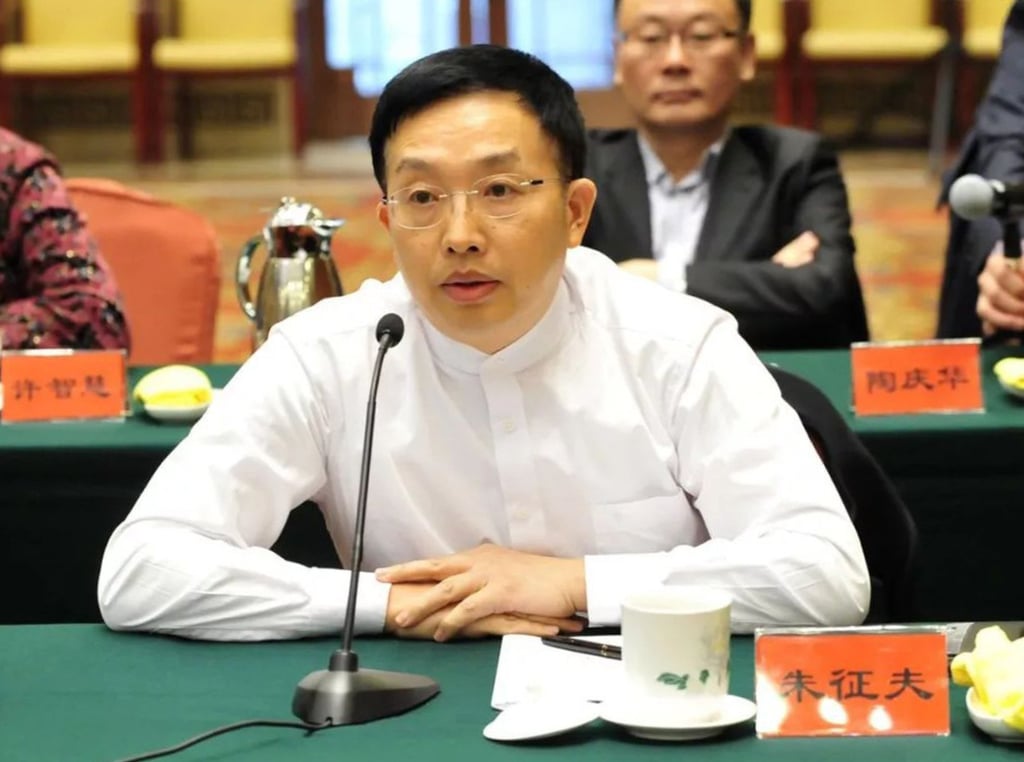
- Zhu Zhengfu, a member of the country’s top political advisory body, says the law is too ambigious in its definition and should be scrapped ‘when the time is right’
What is the Chinese crime of ‘picking quarrels and provoking trouble’?
The proposal to revoke the catch-all crime at the “appropriate time” is set to be submitted by Zhu Zhengfu, a vice-chairman of All China Lawyers Association and a delegate to the Chinese People’s Political Consultative Conference (CPPCC), local media reported.
“The charge is significantly flawed and ambiguous. Not only has it been a judicial obstacle, it has also been highly abused resulting in over-criminalisation,” said Zhu, according to CCPPC Daily, the conference’s official mouthpiece.
Zhu said the main elements of the offence, which targets those “causing severe disruption to public order”, are too vague and open to interpretation.
“Its legal ambiguity breeds room for selective law enforcement, damages the public’s legal interests and undermines judicial credibility.
“It should be revoked when the time is right,” Zhu said, without describing when it would be appropriate to revoke it.
The charge “picking quarrels and provoking trouble” was originally one of the activities covered by the crime of “hooliganism” according to the 1979 Criminal Code.
When the code was revised in 1997, the offence of hooliganism was abolished and “picking quarrels and provoking trouble” became a crime in its own right.
Prosecutors deny request to formally arrest trio for ‘picking quarrels’
The offence can cover actions such as arbitrary physical assaults, verbal assaults, intimidation, vandalism, picking quarrels in public venues and disturbing public order.
It normally carries a maximum sentence of five years but in cases that are deemed especially severe, offenders can be jailed for 10 years and given additional penalties.
In 2013, the authorities extended it to cover people deemed to have posted and spread false news or rumours online.
Liu Sida, associate professor of sociology and law at University of Toronto, said the crime had long been criticised by many Chinese lawyers and legal scholars for being too broad in scope and too ambiguous in practice.
“So it is not surprising to see a lawyer representative of the CPPCC to make such a proposal but I doubt that it would be adopted by the NPC as the proposal would certainly face strong resistance from the law enforcement agencies. Tying police officers’ hands is always a challenge,” Liu said.
Chinese man jailed for insulting Genghis Khan
Teng Biao, a former Chinese human rights lawyer and scholar now based in the US, said it was very unlikely the government would revoke the crime.
“It is one of the most frequently used tools to target human rights activists and dissidents. It’s very convenient for the authorities. The Chinese government has intensified its crackdown on human rights and society. There is no sign that this trend will be reversed,” Teng said.
“Even if the charge is removed, the use of arbitrary detention in China will still be rampant.”

