Beijing centralises power in the provinces ahead of Communist Party congress
- Guangdong reshuffle a case study in growing practice of appointing hand-picked outsiders to key provincial roles
- Analysts find the process has been speeding up at the same time the length of tenure is decreasing, with local issues taking a back seat

But Meng also made sure to be seen first and foremost as a loyalist to President Xi Jinping, who also visited Deng’s statue in the park two years ago to mark the 40th anniversary of the Shenzhen special economic zone.
“We must consistently align our ideology, politics and actions with the Party Central Committee with Comrade Xi Jinping at its core,” he said, according to media reports from Shenzhen, in southern China’s Guangdong province.
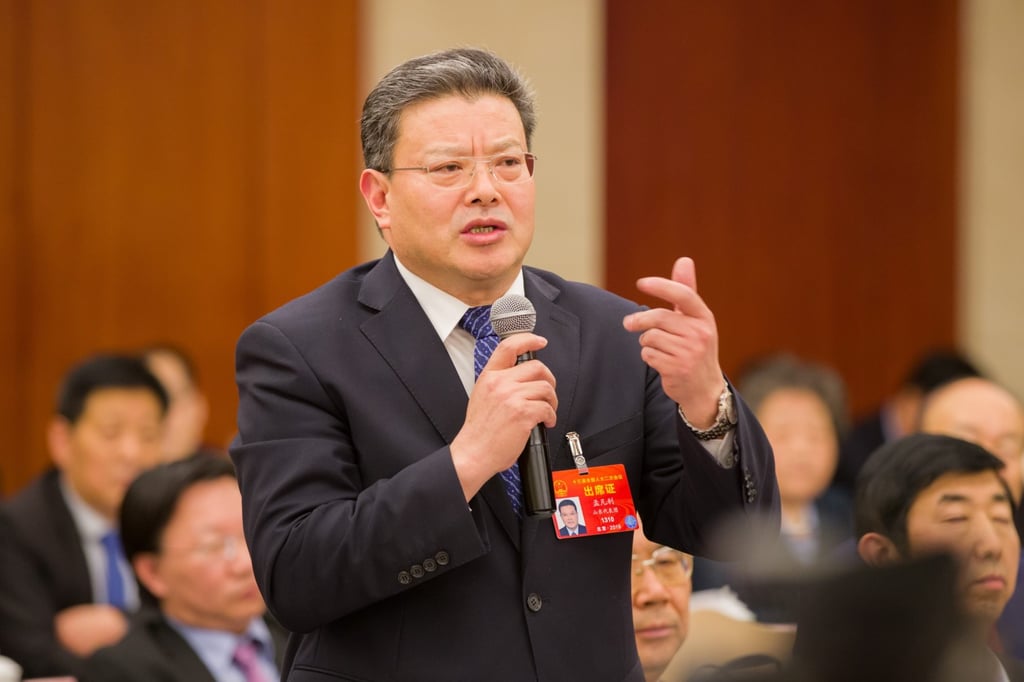
The 56-year-old, from Shandong province in the east, is the latest addition to Guangdong’s senior leadership, in a reshuffle that has seen an increasing number of outsiders parachuted in to key positions that once traditionally went to locals.
The shift towards promoting outsiders to provincial roles is not unique to Guangdong. Numerous studies measuring provincial leadership rotations show an intensifying trend towards centralisation of power.
Meng, former party boss in Baotou, in the landlocked Inner Mongolia region, is widely seen as a rising star, on a similar career path to his predecessors in Shenzhen and as deputy provincial party chief. Ma Xingrui and Wang Weizhong were both also appointed from outside Guangdong.
Ma was Guangdong’s first non-local governor until his promotion in December to Xinjiang party secretary, when Wang stepped up as acting governor, paving the way for Meng’s appointment as the third most powerful man in Guangdong.