On track or off? US analysts say 20th party congress suggests difficult bilateral relations ahead
- New military leadership looks solid, but appointees to domestic positions seem more experienced in party ideology than in economics, which could destabilise ties
- ‘Looking into the future, it is uncertainty as far as the eye can see,’ one analyst says

The twice-in-a-decade Communist Party meetings are generally reserved for handling succession issues and outlining broad vision. But China is facing a property crisis, consumer slump tied to its zero-Covid policy, weakening currency, capital outflow and historically low growth rates even as youth unemployment hit a record high of 19.3 per cent in June.
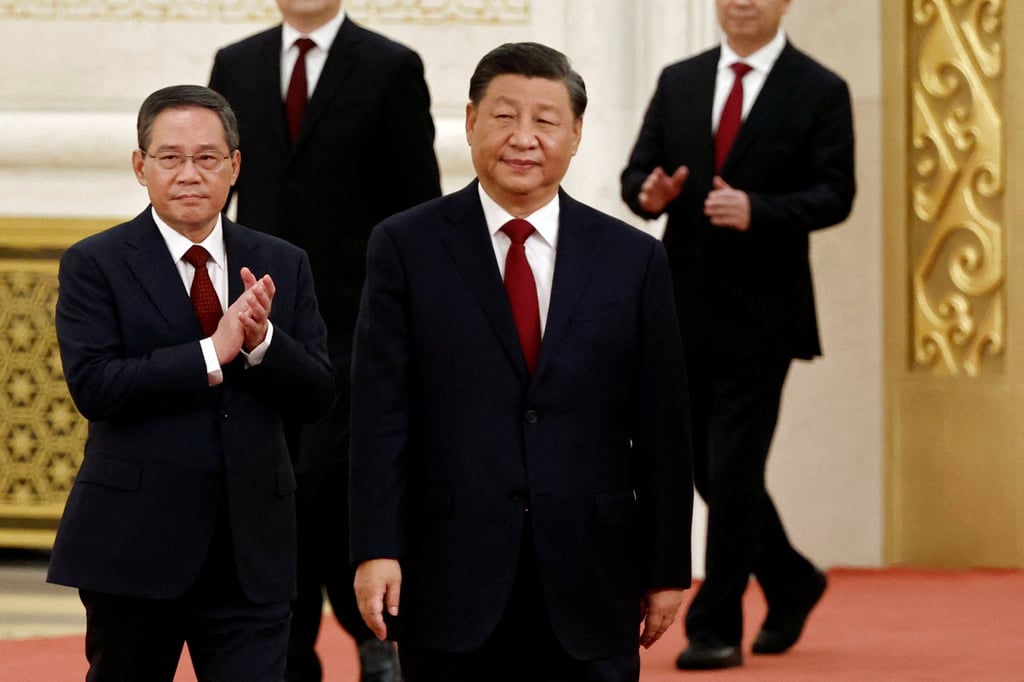
The party congress “does not normally deal with that set of things, but these are not normal times”, said Dan Rosen, founding partner at the Rhodium Group, which tracks China’s economy. “There’s really nothing other than just that the triumph of the will is somehow going to produce a fiscal reform strategy that resolves the obstacles of the past. And I didn’t see it and I think nobody sees really any of that.”
Many of the new leaders ascending to the top ranks of the Central Military Command, China’s defence oversight body, have management skills, experience in multiple military theatres – including the China-India border, South China Sea and East China Sea – and technological expertise important for modernisation, analysts said. There is also continuity, with a solid mix of promoted leaders and those remaining in their jobs, serving China’s interest.
In the economic realm, however, the linchpin of China’s historic rise, many of those earning promotions are more versed in Communist Party ideology and politics than technical know-how, even as a large number with economic experience and technocratic skill head for the exit.
“Looking into the future, it is uncertainty as far as the eye can see,” said Scott Kennedy, a fellow at the Centre for Strategic and International Studies (CSIS). “You’ll see maybe some continuity on the military side and foreign policy side. On the econ side, we are going to see a significant changing of the guard.”