Advertisement
Advertisement
Taiwan election 2024
Get more with myNEWS
A personalised news feed of stories that matter to you
Learn more
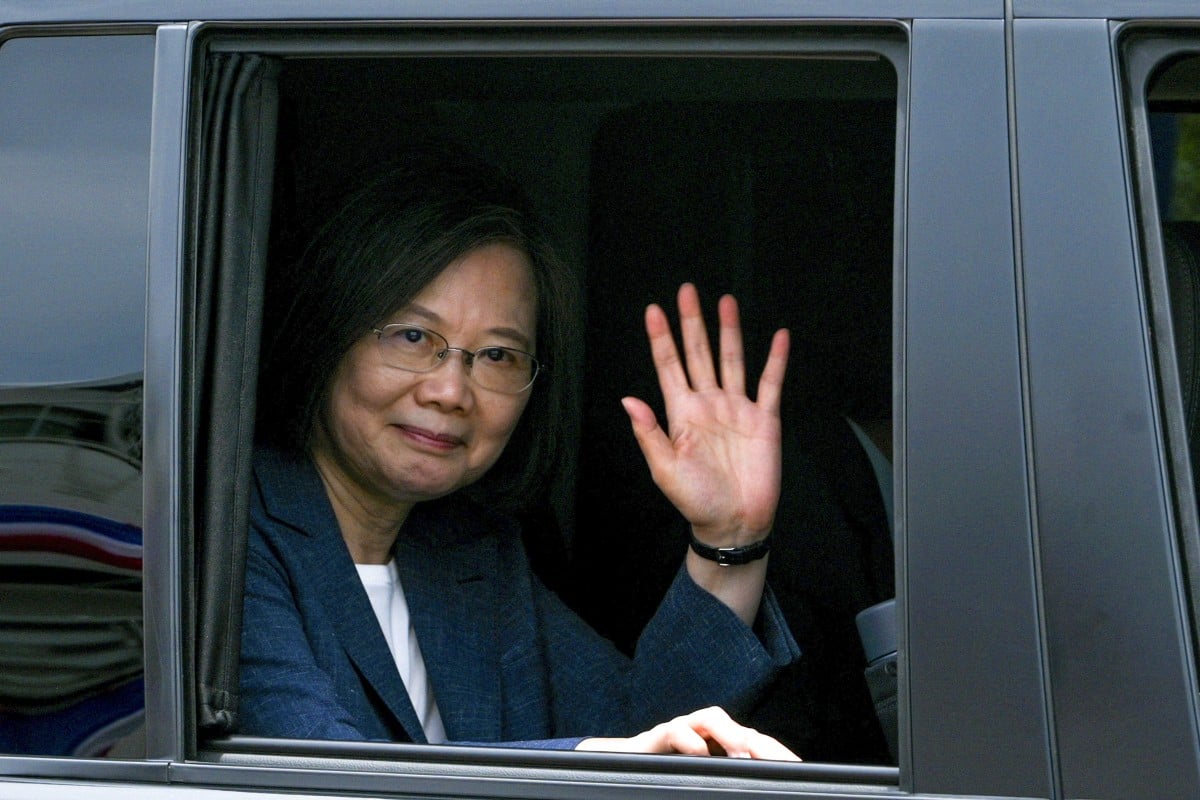
Taiwanese President Tsai Ing-wen has to take responsibility for the slide as the alleged sexual offences happened on her watch, according to the head of the Taipei-based polling agency behind the survey. Photo: AFP

Support for Taiwanese President Tsai Ing-wen at 4-year low as #MeToo scandals rock ruling party

  • Disapproval rating for Taiwanese leader at 48.2 per cent tops the previous worst from May 2019, survey shows
  • #MeToo cases involving the DPP and Tsai’s controversial choices for constitutional court justices main factors behind slide, head of pollster says
Public support for Taiwanese President Tsai Ing-wen has dropped to its lowest level in four years as her party becomes caught up in a wave of #MeToo allegations.

The Taiwanese Public Opinion Foundation put Tsai’s approval rating at 42.3 per cent this month, down from 45.3 per cent in May.

Her disapproval rating, meanwhile, rose to 48.2 per cent – from about 37 per cent in May. It was the worst showing since May 2019, when nearly 47 per cent of voters found her performance disappointing, according to the Taipei-based independent polling agency known for its impartial stance.

“There are two main reasons for the drop in her popularity. The first is due to the impact of a host of sexual harassment cases on the ruling Democratic Progressive Party (DPP),” foundation head Michael You Ying-lung said as the latest survey results were released on Tuesday.

The wave of sexual harassment and assault allegations, which began with a DPP whistle-blower on May 31, has also taken a toll on the governing party.

Its popularity dropped to 24.6 per cent, from 31.1 per cent in May, a June 14 survey by the foundation showed.

You said Tsai had to take the blame as all of the alleged incidents of sexual harassment occurred while she was the head of the party, and her close aide, senior presidential adviser Yen Chih-fa, was alleged to have been implicated in one of the cases.

Moreover, Tsai’s office on June 4 said it had no right to start an investigation into the case as the alleged incident did not take place at the presidential office. The diktat was interpreted as an attempt to dodge the blame, according to You.

DPP officials hold a press conference to address the sexual harassment allegations, in Taipei on June 2. Photo: CNA

Yen, 86, has been accused of sexually harassing a former employee of a campaign group, Friends of Tsai Ing-wen Association, when she worked there in 2018.

Yen denied the allegation, but resigned two days later on June 6 and withdrew a libel suit against the complainant that he had filed only the day before.

His departure was followed by a second apology from Tsai in the space of a week over the #MeToo allegations rocking her party, and a pledge to reform gender equality rules within the government.

The second major factor for Tsai’s loss of popularity might have been the controversy over her choice of four grand justices to fill vacancies on Taiwan’s constitutional court, You said.

The four nominees are seen as friendly to the independence-leaning DPP, sparking criticism that Tsai had turned the entire 15-seat council of grand justices into a pro-DPP organisation, with future rulings likely to favour the DPP’s political positions.

Other likely factors were inflation and the high cost of living, shrinking exports and poor overall economic performance, according to You.

When Tsai began her second and final four-year term in May 2020, her approval rating was as high as 71 per cent.

“It is worth pondering if the public disappointment towards Tsai’s job performance will create any negative impact on [the DPP] in the presidential and legislative elections [in January],” he said.
Taiwan’s other major political party and the DPP’s main opponent, the Kuomintang, is seen as friendly towards Beijing, which considers the self-governed island to be breakaway Chinese territory awaiting reunification. The DPP rejects this scenario.

Taiwan can suggest how to govern it after reunifying, PLA strategist says

Tsai stepped down as chairwoman in December after the party suffered massive defeats to the KMT in mayoral and county elections.

Meanwhile, dozens of former DPP party workers have come forward with their stories since a whistle-blower colleague posted on social media about her ordeal. She accused a DPP executive of covering up her complaint of having been sexually harassed by a filmmaker when they were working on a promotional project for the party in September.

At least four senior DPP figures have resigned so far due to their poor handling of the cases or alleged involvement in them.

The #MeToo wave has since spread beyond the political sphere, with high-profile figures including academics, TV pundits, doctors, mainland Chinese dissidents in exile, former Taiwanese diplomats and judicial officials as well as celebrities among the accused.

In one of the latest cases, Chuang Suo-hang, Taiwan’s de facto ambassador to Thailand, stepped down on Wednesday after he was alleged to have sexually harassed a fellow worker at the island’s representative office in Bangkok.

Taiwan’s foreign ministry said on Saturday that, based on the government’s “zero tolerance” standards, it had asked Chuang to resign following an initial investigation into his alleged wrongdoings. It said the complainant had reported the case to the ministry, but did not give details.

On Tuesday, popular Taiwanese actor and singer Aaron Yan was accused by a celebrity YouTuber of filming the pair during a sex act without consent when the complainant was only 16 years old.

After first apologising via a statement on Facebook, Yan abruptly appeared at a press conference held by his accuser on Wednesday, and apologised to him in person for making him “suffer what you did not deserve”.

Aaron Yan apologises to a YouTuber who has accused him of filming an intimate act without consent. Photo: CNA

Two days earlier, popular television host Mickey Huang apparently attempted to self-harm after confessing to sexual misconduct. This came after internet celebrity Zofia said she had been forcibly kissed in a car and tricked into posing topless for photos for a purported “art exhibition” when she was only 17. She did not name Huang, but left easy clues to help identify the accused.

At noon the same day, Huang uploaded three videos to his Facebook page expressing regret for not living up to public expectations and “violating their trust”.

In an emotional outburst, he also lamented that it was unfair that he was the only one to get caught while 13 other high-profile show business figures he knew well were able to escape being named for similar or other wrongdoings.

Huang’s wife later confirmed he had been admitted to a hospital for what local news media reports said were self-inflicted wounds.

The local #MeToo movement, which has gained momentum since June 1, was sparked by the hit Taiwanese Netflix drama Wave Makers, about a fictional group of political workers working on an election campaign. One of the female aides finds herself in a dilemma over whether she should expose sexual harassment by a male colleague.

Wave Makers: top Netflix election drama by The World Between Us director

The first DPP whistle-blower admitted on social media that she was inspired by the show to come forward. A male actor in the series was also the target of sexual assault allegations, which he has strongly denied.

Meanwhile, former disciplinary court chief Lee Po-tao, who retired a month early citing health reasons, denied in a statement on Wednesday that his resignation in May had anything to do with allegations of having sexually assaulted a female colleague.

He did, however, express regret for any action that might have been deemed inappropriate, saying: “For one who had worked with me relatively closely at the disciplinary court, I am deeply sorry and regretful if I had made her feel uncomfortable at any venue or occasion.”

Lee, 70, also said he was willing to face a fair investigation.

Other high-profile figures involved in recent #MeToo allegations include Bartosz Rys, a former deputy representative of the de facto Polish embassy in Taipei, and exiled mainland Chinese poet Bei Ling.

Mainland Chinese dissident Wang Dan also faced allegations of sexual assault from two men, one of whom sued Wang for forcible kissing and attempted rape in New York in 2014.

Rys, Bei and Wang have dismissed the allegations against them as groundless.

38