Advertisement
Ma Ying-jeou’s mainland China trip shows he’s Beijing’s best hope to win Taiwanese hearts and minds
- Analysts believe former Taiwanese leader’s VIP visit to mainland could help Beijing amplify appeals for ‘peaceful reunification’ with the island
- Ma’s ‘journey of peace’ also sends well-timed message to Taiwan’s president-elect William Lai Ching-te of the independence-leaning DPP, observers say
6-MIN READ6-MIN
28

Lawrence Chungin Taipei
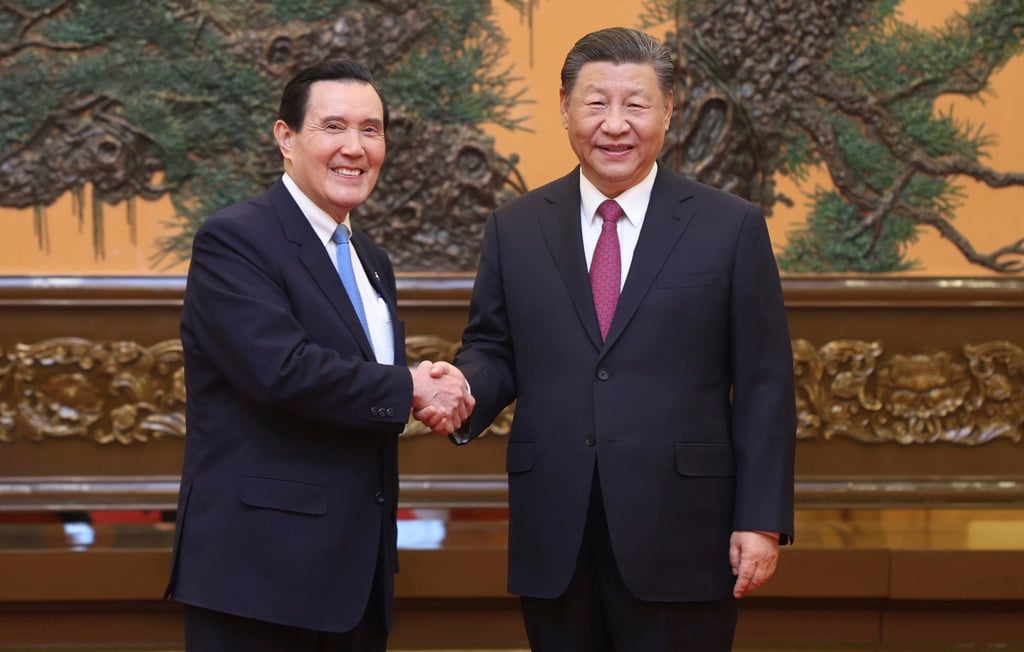
When Taiwan’s former leader Ma Ying-jeou was received by mainland Chinese President Xi Jinping on Wednesday, he was referred to simply as “Mister Ma” as Beijing walked the tight rope between offering hospitality while refraining from endorsing the island’s government.
Yet he is much more than a “mister” to Beijing. Ma, the first former or sitting Taiwanese president to be received by mainland China’s leader, remains Beijing’s top choice to help it win Taiwanese hearts and minds.
Though Ma’s party, the Kuomintang, has lost three consecutive presidential elections, he still carries weight within the island’s opposition camp, which is typically friendlier towards mainland China than the ruling Democratic Progressive Party (DPP).
Advertisement
“Even though our political systems and perspectives may differ from those of the mainland, we are all descendants of the Yellow Emperor, belonging to the same Chinese nation,” Ma said upon returning to Taiwan on Thursday, wrapping up a trip he dubbed a “journey of peace”.
“I also hope that the young people of Taiwan can set aside ideological differences and recognise the historical and cultural connections between Taiwan and the mainland, which cannot be severed by politics.”
He added that his trip showed it was still possible for the “1992 consensus” to serve as a basis for addressing disputes between Beijing and Taipei. The consensus is a tacit agreement that for the two sides to continue to talk, they must recognise there is only one China, though each side can have its own interpretation of what that means.
Advertisement
Advertisement
Select Voice
Select Speed
1.00x