Advertisement
Taiwan
ChinaPolitics

Will Taiwan’s food safety scandal wreck the DPP’s local election hopes?

The opposition has been handed the chance to portray the government as both ineffective and hypocritical ahead of the poll

3-MIN READ3-MIN
Listen
The Taiwanese authorities said that nearly 8,500 tonnes of soybean salad oil contained levels of a carcinogen that exceeded the legal limit. Photo: The Taichung City Food Safety Department
Lawrence Chungin Taipei
Taiwan’s biggest food safety scandal in years has become a political liability for the ruling Democratic Progressive Party (DPP), giving the opposition valuable ammunition ahead of November’s local elections.

The latest controversy centres on soybean salad oil produced by Central Union Oil Corporation, which was found to contain excessive levels of benzo[a]pyrene (BaP).

The substance is classified as a carcinogen by the International Agency for Research on Cancer.

According to Taiwan’s food authorities, the Taichung-based manufacturer produced about 28,992 tonnes of soybean salad oil in 30 batches between April and June, supplying three of the island’s largest food companies – Fwusow Industry, Formosa Oilseed Processing and Taisun Enterprise.

The contamination was spotted by downstream food-maker Namchow Group, which detected abnormal BaP levels during routine testing on May 13. Central Union was informed on June 11 but did not notify regulators until June 30.
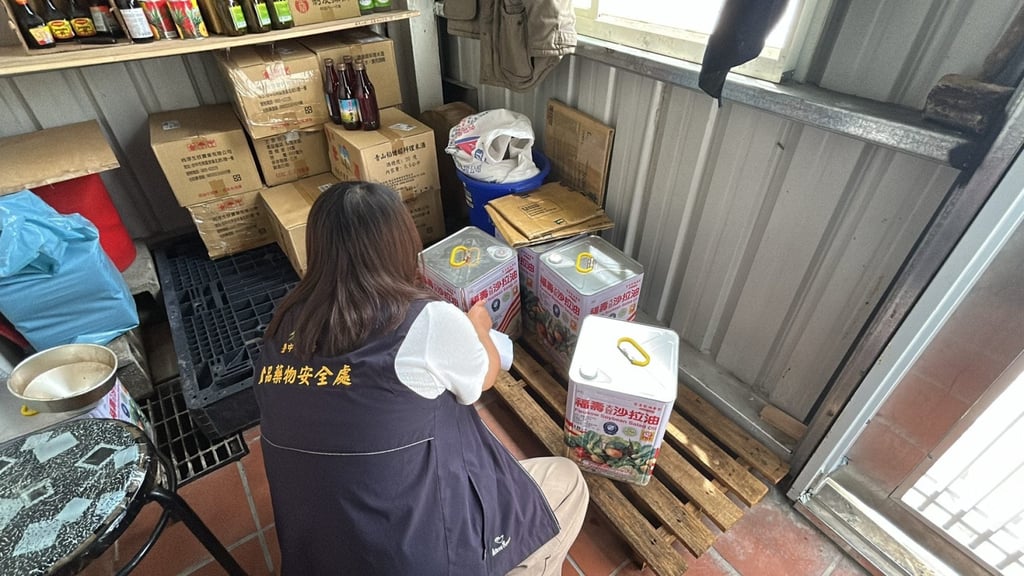
This isn’t Taiwan’s first contaminated edible oil scandal. In 2014, hundreds of tons of recycled waste and animal feed oil were illegally processed and sold. Photo: The Taichung City Food Safety Department

The government waited till July 3 to officially announce the problem and recall measures.

Advertisement
Select Voice
Select Speed
1.00x