Peking Man may not be that smart – even for the Stone Age, Chinese scientist says
- Researcher says some might find it hard to accept that early humans they assumed to be their ancestors ‘were stupid’
- Report suggests that isolation may have made Peking Man less adaptable

“Peking Man”, the Stone Age humans who are believed to be ancestors of the Chinese, left little evidence that they had ever evolved, according to a Chinese scientist.
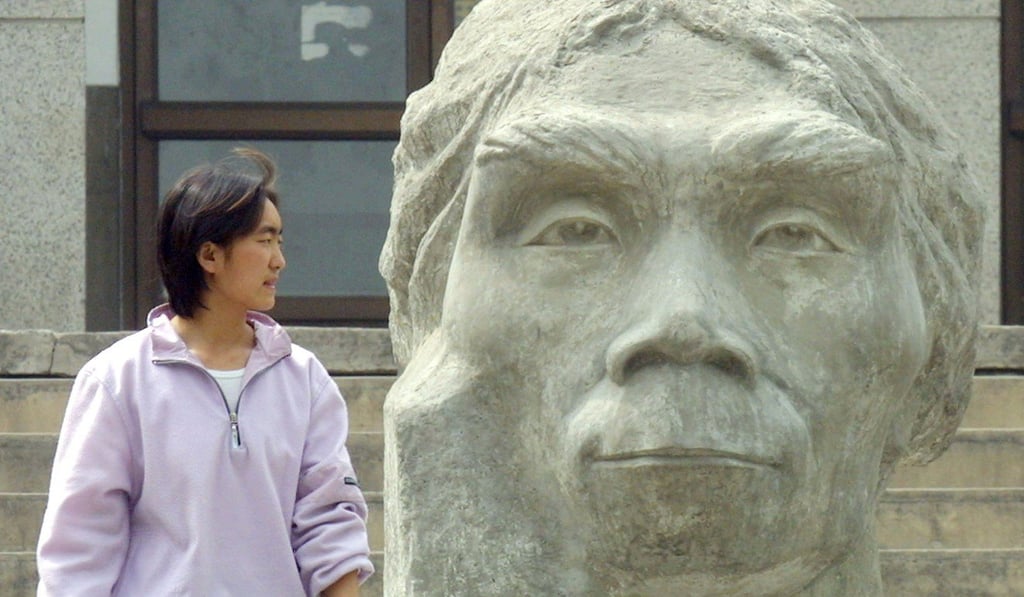
In 1929, a nearly complete skull of Homo erectus pekinensis was discovered in a cave at Zhoukoudian in southwest Peking, as the Chinese capital was then known.
Peking Man became a household name as the earliest human sub species discovered in China, and some scientists maintained that they passed their DNA on to present-day Chinese.
In a paper for the journal Fossils to be published at the end of the month, Wei compared stone tools found at the Peking Man site to those made by the Nihewanians, palaeolithic humans who lived in what is now Yangyuan, northern Hebei province, more than a million years ago.