Glaciers melting at ‘shocking’ pace in northern China mountains
- Researchers raise alarm at accelerating rate of disappearing ice in remote Qilian range at the edge of Tibetan plateau
- Largest glacier shrinks by 7 per cent since monitoring began in the 1950s

The largest glacier in the 800km (500 mile) mountain chain on the arid northeastern edge of the Tibetan plateau has retreated about 450 metres since the 1950s, when researchers set up China’s first monitoring station to study it. The 20 sq km glacier, known as Laohugou No 12, has shrunk by about 7 per cent since measurements began, with melting accelerating in recent years, scientists say.
Equally alarming is the loss of thickness, with about 13 metres (42 feet) of ice disappearing as temperatures have risen, according to monitoring station director Qin Xiang. “The speed that this glacier has been shrinking is really shocking,” he said on a recent visit to the station where he and a small team of researchers track the changes.
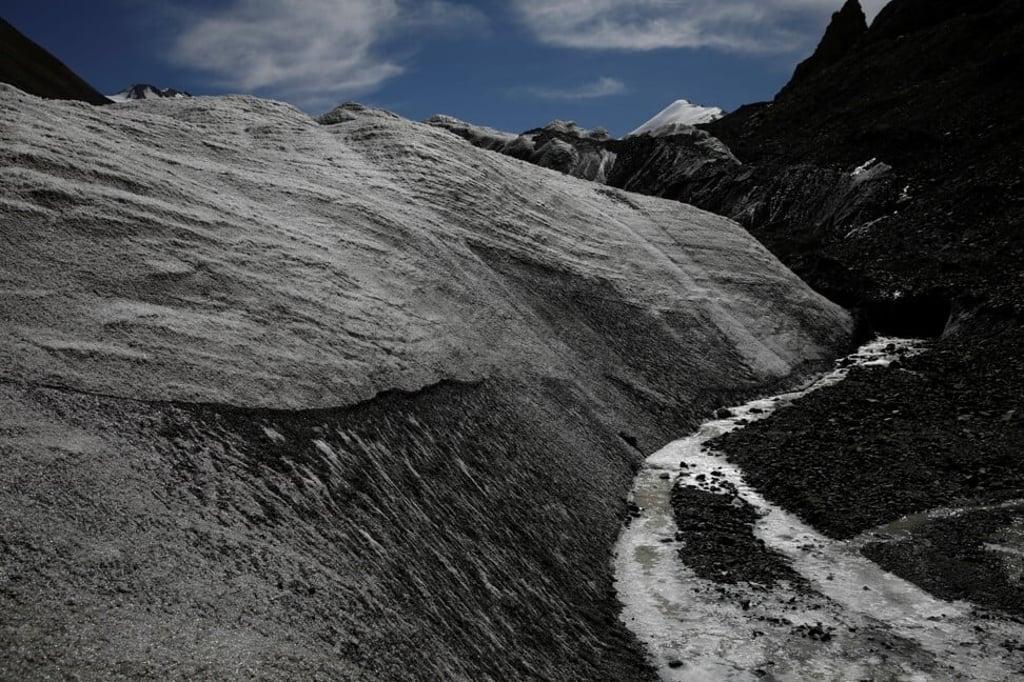
With no sign of an end to warming, the outlook is grim for the 2,684 glaciers in the Qilian range. Across the mountains, glacier retreat was 50 per cent faster in 1990-2010 than it was from 1956 to 1990, data from the China Academy of Sciences shows.