Melting glaciers threaten China’s plan to build world’s biggest hydroelectric dam in Tibet
- A landslide in 2018 has created an icy problem in the Yarlung Tsangpo, the proposed site of a hydropower plant
- Climate change may make the roof of the world more liveable but with the warmth comes the risk of more natural disasters

The Yarlung Tsangpo is the longest river in Tibet. And the Yarlung Tsangpo valley in southern Tibet is the world’s deepest valley with a 7,000-metre (23,000-foot) drop from the highest mountain peak to the lowest basin.
But an icy obstacle could put a halt to much of the plan.
The Sedongpu lake sits just a few dozen kilometres upstream from the planned construction site of the super hydropower plant. With so much water hanging overhead, no construction workers can move in to clear the ground.
To build the big dam, they must get rid of the small dam formed by the landslide first.
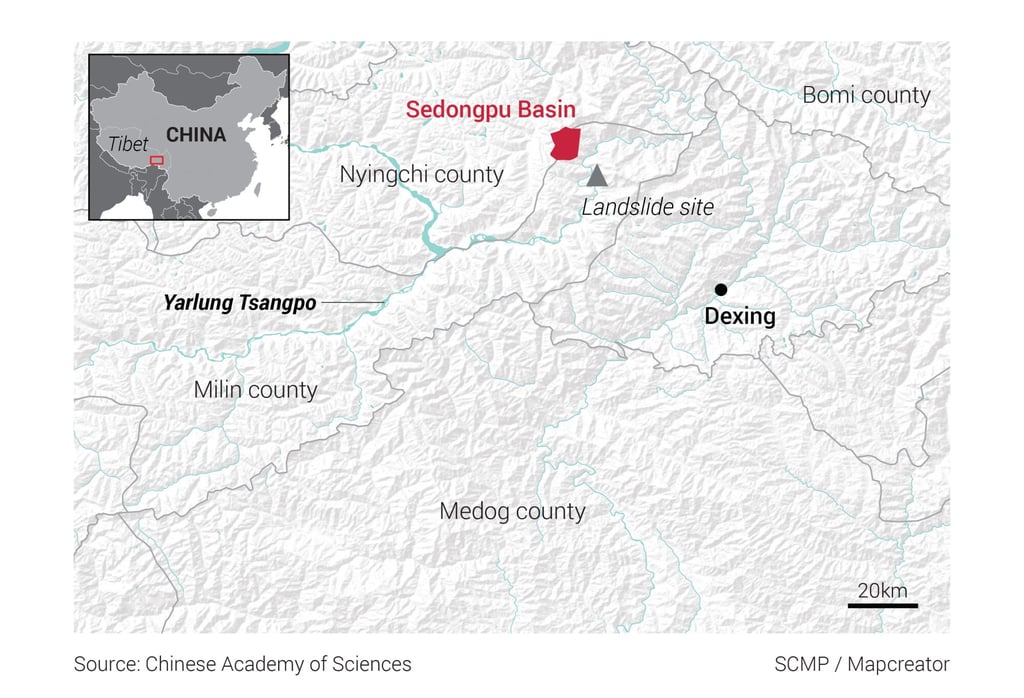
Several teams of scientists and engineers have flown to Sedongpu in recent years, including some of the nation’s top experts in civil engineering, glacier study and landslide prevention. They collected a large amount of data on the site using drones and other advanced equipment and were asked by authorities to come up with a solution after finishing their assessment.