‘Dragon Man’: scientists in China say new human species is our closest ancestor
- A skull discovered in northeast China represents a newly discovered human species they have named Homo longi, or “Dragon Man”

Scientists announced Friday that a skull discovered in northeast China represents a newly discovered human species they have named Homo longi, or “Dragon Man” – and they say the lineage should replace Neanderthals as our closest relatives.
The Harbin cranium was discovered in the 1930s in the city of the same name in Heilongjiang province, but was reportedly hidden in a well for 85 years to protect it from the Japanese army.
It was later dug up and handed to Ji Qiang, a professor at Hebei GEO University, in 2018.
“On our analyses, the Harbin group is more closely linked to H. sapiens than the Neanderthals are – that is, Harbin shared a more recent common ancestor with us than the Neanderthals did,” co-author Chris Stringer of the Natural History Museum, London, said. “If these are regarded as distinct species, then this is our sister [most closely related] species.”
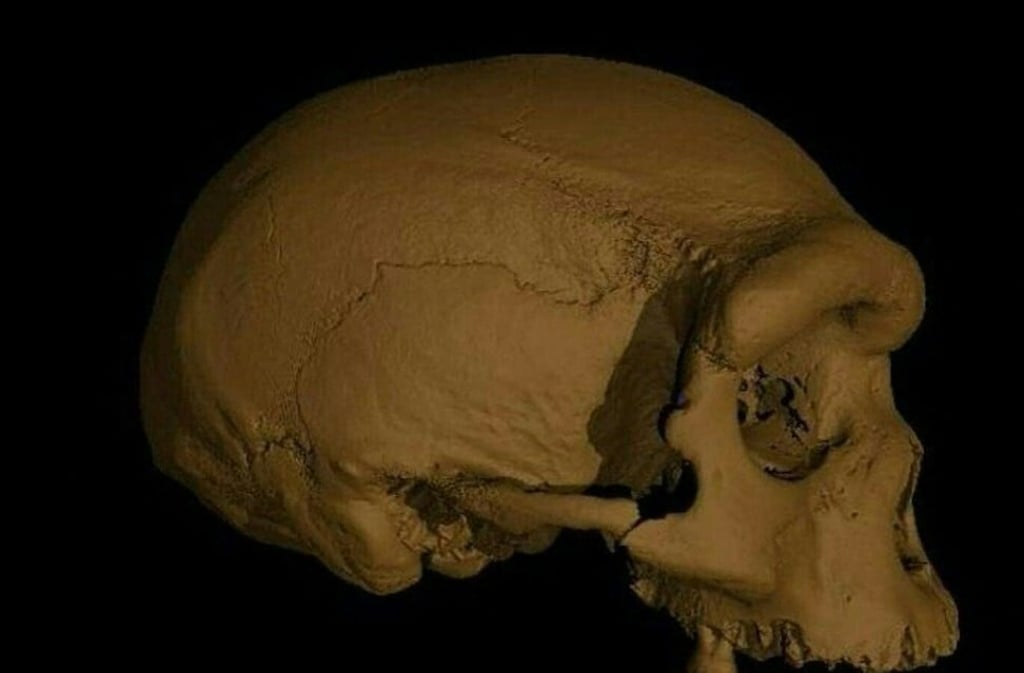
The findings were published in three papers in the journal, The Innovation. The skull dates back at least 146,000 years, placing it in the Middle Pleistocene.