China’s steelmakers need cleaner process to put climate goals in reach, report says
- Industry is the second-largest carbon emitter after the power sector, but this could be reduced if it moves to electric, according to US think tank
- It also estimates steel producers could be saddled with US$70 billion in stranded assets if they continue building new blast furnaces using coal

Reducing the carbon dioxide emissions of steel plants will be critical to achieving Beijing’s climate targets since the sector is so vast, with China accounting for more than half of the world’s steelmaking capacity, the report released on Tuesday said.
It said the country’s steelmakers produce over 60 per cent of the global steel industry’s emissions, and the sector accounts for 15 per cent of China’s carbon dioxide emissions. That makes it the second-largest emitter in the country after the power sector, which produces about 40 per cent of total emissions.
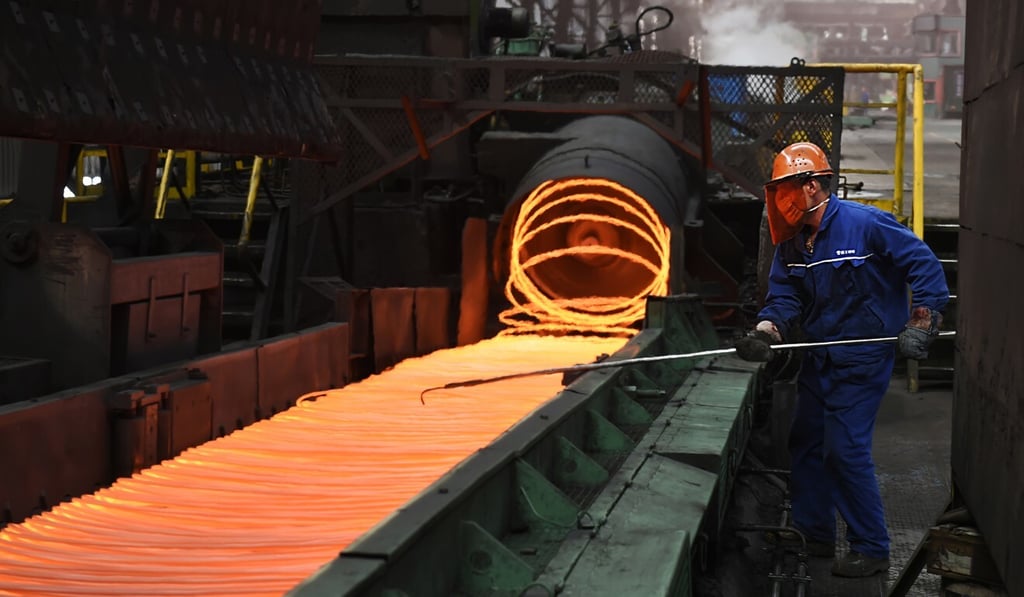
But the group said steelmakers could take action to reduce emissions by moving to a less carbon-intensive process. More than 75 per cent of plants in operation use a high-carbon process called blast furnace-basic oxygen furnace, or BF-BOF. It said 93 per cent of the steelmaking capacity being built in China will use this process – compared to 75 per cent under construction worldwide.
“To decarbonise the steel sector, China needs to transition away from BF-BOF steelmaking to the electric arc furnace (EAF) steelmaking,” said Caitlin Swalec, lead author of the report.
“Building new BF-BOF steel plants brings large stranded asset risk to the country, especially with the complications of overcapacity, so any new capacity in China should be lower-emissions processes like scrap-based EAFs,” she said.
The report was based on the first comprehensive survey of all crude steel plants around the world with a capacity of at least 1 million tonnes per annum. It looked at 553 steel plants representing 82 per cent of the world’s installed capacity, as well as 42 proposed new facilities.