Advertisement
Study of sediment finds climate cycles may have caused the rise and fall of Tibetan dynasty
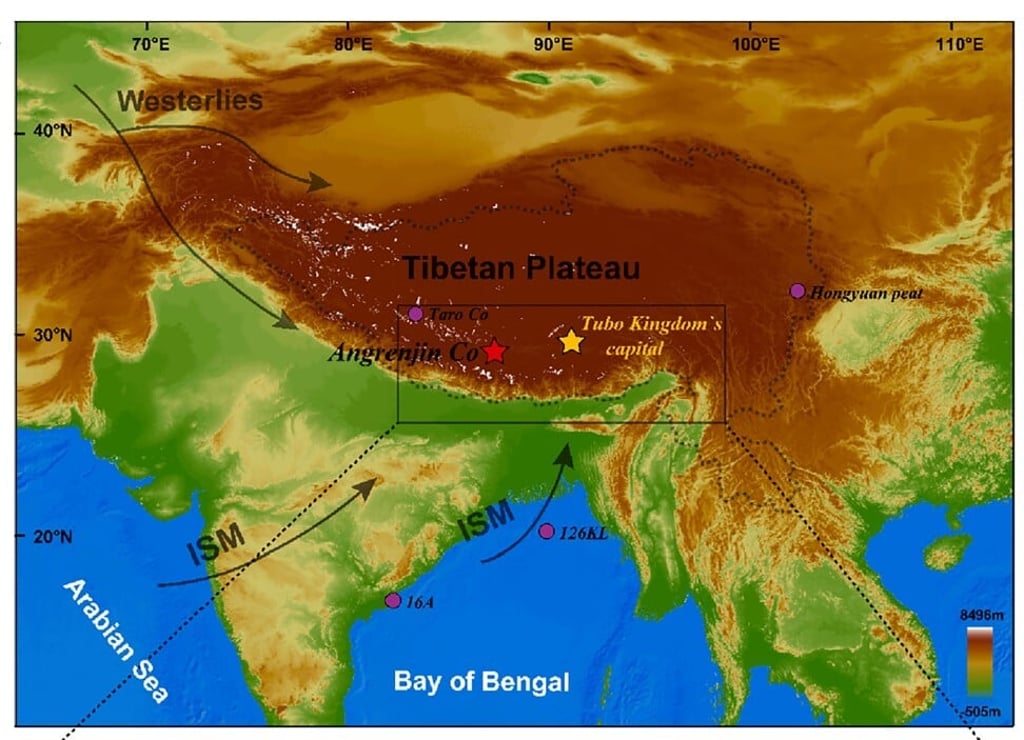
- Tubo empire peaked in the late 8th century but nearly a century of extremely dry climate followed and it fell because of warring tribes and kingdoms
- Chinese scientists examined lake core samples, finding the variation in the lake’s climate record matched sun cycles almost perfectly
3-MIN READ3-MIN
2

The rise and fall of the Tibetan empire could be closely linked to sun cycles, according to an international study.
Unusually weak solar activity around 600AD brought more rain and snow to the Tibetan plateau, found the researchers, with the wetter climate helping create Tubo, the first unified empire in Tibet, in the mid-7th century.
By the 9th century, however, ultra-strong solar winds had upended the regional climate, causing famine and social unrest that led to the Tibetan empire’s epic collapse.
Advertisement
“There are many reasons contributing to the rise and fall of an empire. We found some clues not recorded in historic texts,” said a lead scientist of the study, Xu Deke, of the Institute of Geology and Geophysics, Chinese Academy of Sciences in Beijing, in a phone interview with the South China Morning Post on Wednesday.
Advertisement
The findings were published in the peer-reviewed Palaeogeography, Palaeoclimatology, Palaeoecology journal this month.
Advertisement
Select Voice
Select Speed
1.00x