Federal trial opens of Harvard professor accused of hiding ties to China
- Nanotechnology expert Charles Lieber faces charges of tax evasion and hiding his participation in China’s Thousand Talents Plan
- Prosecution is part of US Justice Department’s ‘China Initiative’, which was set up to help stop technology theft but has drawn fire for overreach

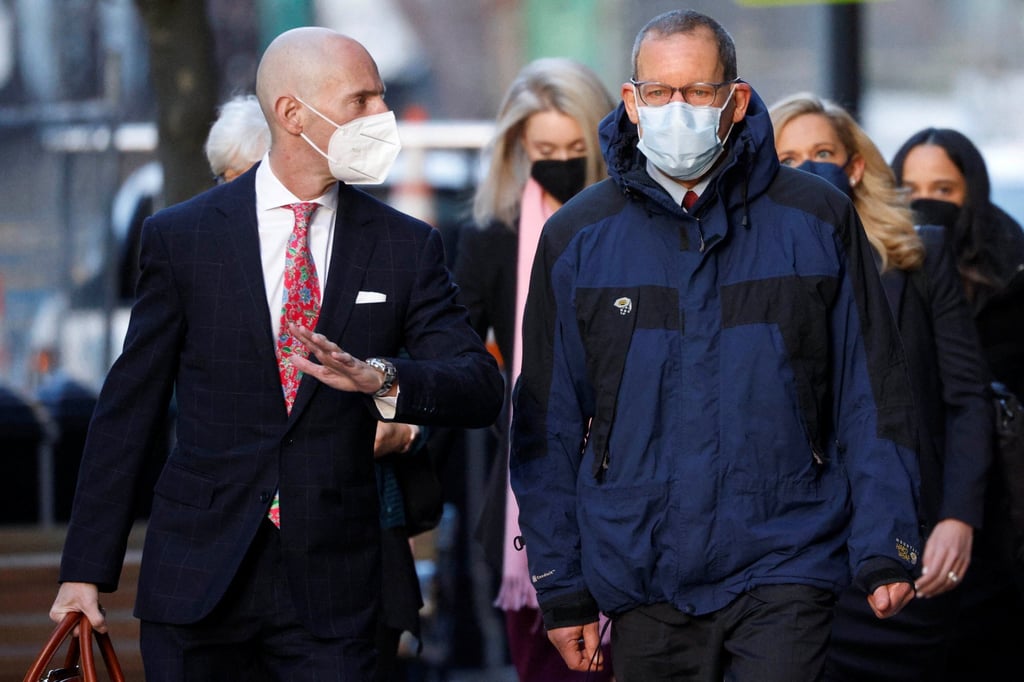
On the first day of the federal criminal trial of Harvard professor Charles Lieber on Wednesday, his defence lawyers rejected charges that the nanotechnology expert had hidden his participation in a Chinese talent programme, arguing that the prosecution’s evidence was weak, disorganised and obtained in roughshod fashion.
Lieber, 54, is charged with tax evasion, failing to disclose foreign bank accounts and hiding his role in China’s Thousand Talents Plan, a foreign recruitment programme with links to the Wuhan University of Technology. Lieber, the former chairman of Harvard’s chemistry department, has denied all charges.
“If you’re going to blow into somebody’s office, handcuff them behind the back, then 25 agents go to their house and bring the full force of the US government down on them – because you think they made false statements – you better damned well have those statements,” Marc Mukasey, Lieber’s lead lawyer, said in his opening argument on Wednesday. “And the government doesn’t have any of this.”
Federal prosecutors countered that video footage, meeting notes and dozens of emails showed that Lieber knew what he was doing; that he hid tens of thousands of US dollars in payments from China, some brought back to the US in cash; and that he repeatedly denied or underplayed to Harvard, the FBI and the National Institute of Health his participation in Beijing’s recruitment programme.
“I ask you to use your common sense in your evaluation,” said Jason Casey, the assistant US attorney who is leading the prosecution. “The defendant did not tell the truth.”
Participating in the Thousand Talents Plan was not in itself a crime, Casey said, but Lieber’s failure to report to US authorities his funding and research links to China was.