China plans to feed 80 million people with ‘seawater rice’
- New salt-tolerant rice strains have been developed by Chinese scientists in the hope of ensuring food security that’s been threatened by rising sea levels
- Test fields in Tianjin recorded a yield of 4.6 metric tons per acre last year, higher than the national average for production of standard rice varieties

Jinghai district in northern China is hardly a rice-growing paradise. Located along the coast of the Bohai Sea, over half of the region’s land is made of salty, alkaline soil where crops can’t survive. Yet, last autumn, Jinghai produced 100 hectares of rice.
The secret to the bountiful harvest is new salt-tolerant rice strains developed by Chinese scientists in the hope of ensuring food security that’s been threatened by rising sea levels, increasing grain demand and supply chain disruptions.
Known as “seawater rice” because it’s grown in salty soil near the sea, the strains were created by over-expressing a gene from selected wild rice that’s more resistant to saline and alkali. Test fields in Tianjin – the municipality that encompasses Jinghai – recorded a yield of 4.6 metric tons per acre last year, higher than the national average for production of standard rice varieties.

02:29
Floating farms, salt-resistant rice among ways Bangladeshis adapt to survive violent floods
China has been studying salt-tolerant rice since at least the 1950s. But the term “seawater rice” only started to gain mainstream attention in recent years after the late Yuan Longping, once the nation’s top agricultural scientist, began researching the idea in 2012.
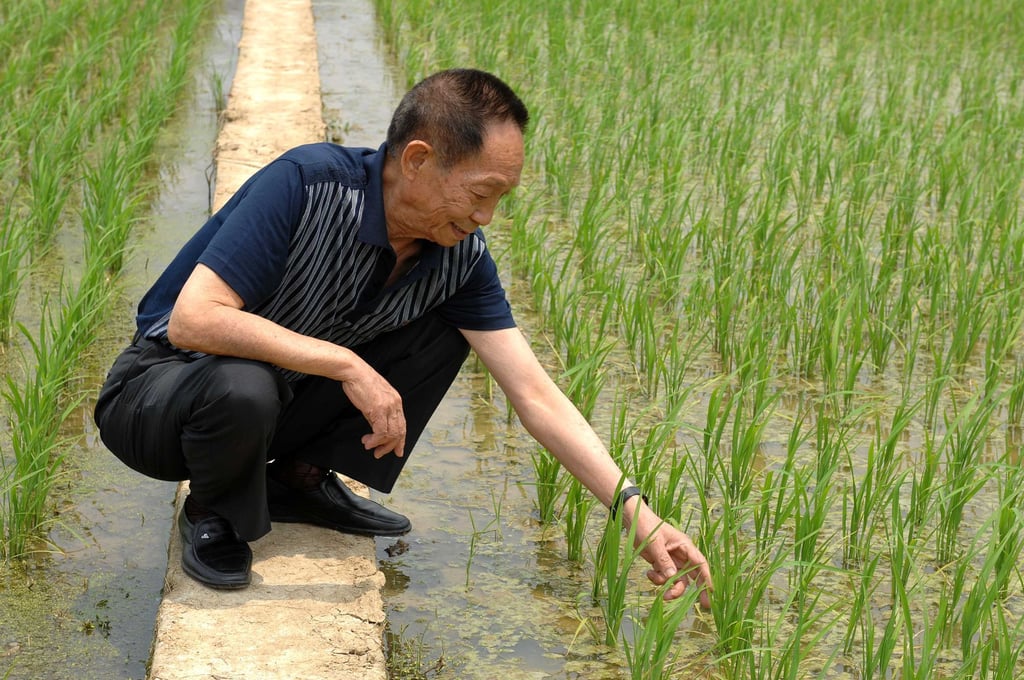
Yuan, known as the “father of hybrid rice,” is considered a national hero for boosting grain harvests and saving millions from hunger thanks to his work on high-yielding hybrid rice varieties in the 1970s. In 2016, he selected six locations across the country with different soil conditions that were turned into testing fields for salt-tolerant rice. The following year, China established the research centre in Qingdao where Wan works. The institute’s goal is to harvest 30 million tons of rice using 6.7 million hectares of barren land.