Advertisement
The colour of evolution in northern China: are small Old Stone Age tools and ochre proof of first human colonisation?
- Ochre use and small tools reveal ‘novel technology’, and suggest cultural adaptations indicative of first colonisation by modern humans, says team behind dig
- ‘Current evolutionary scenarios are simplistic’, asserts paper published in the Nature journal
3-MIN READ3-MIN
3

A 40,000-year-old site in northern China may have revealed the earliest evidence of ochre processing in eastern Asia, and even the first colonisation of an indigenous culture.
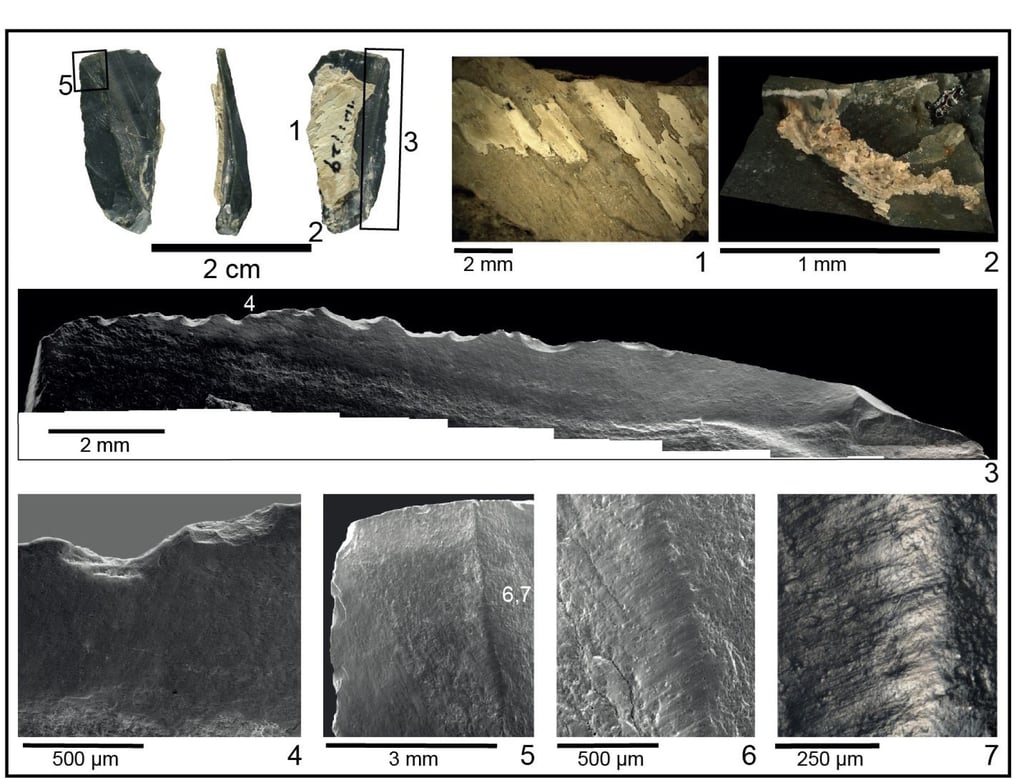
The find indicates innovative behaviours with the mineral pigment, although its purpose remains unclear, according to an international team behind the dig, which also unearthed a collection of about 400 stone tools.
Most of the 382 stone artefacts found in the riverside dig in the well-preserved riverside site of Xiamabei – in Hebei province – were shorter than 4cm (1.6in).
Advertisement
Some of them featured handles, or hafts, representing a “novel technology for northern China”, said the team, which included scientists from the Hebei Provincial Institute of Cultural Relics and Archaeology, the Chinese Academy of Sciences, and their peers from institutes in Australia, Austria, France, Germany, Norway, Spain and the United States.
Their findings, published in the latest edition of the peer-reviewed journal Nature, suggest that “cultural adaptations at Xiamabei may reflect a first colonisation by modern humans, potentially involving cultural and genetic mixing with local Denisovans, [who were] perhaps replaced by a later second arrival”.
Advertisement
Advertisement
Select Voice
Select Speed
1.00x