Scientists say they have made a vivid 3D printing ink without dyes and pigments
- The biocompatible ink is safe for use in toys that change colour or even food decorations, though it’s not yet edible, according to Chinese team
- New technology is based on structural colouration – meaning it produces colours through interactions between light and intrinsic nanostructures

The biocompatible ink could potentially be developed for wearable biosensors and bionic skins to monitor exercise through changing colours, according to the team.
“We believe that this cholesteric liquid crystal ink can shed light on next-generation environmentally friendly 3D photonic printing,” the team wrote. “The ink maintains a cholesteric liquid crystalline state that gives rise to the structural colour.”
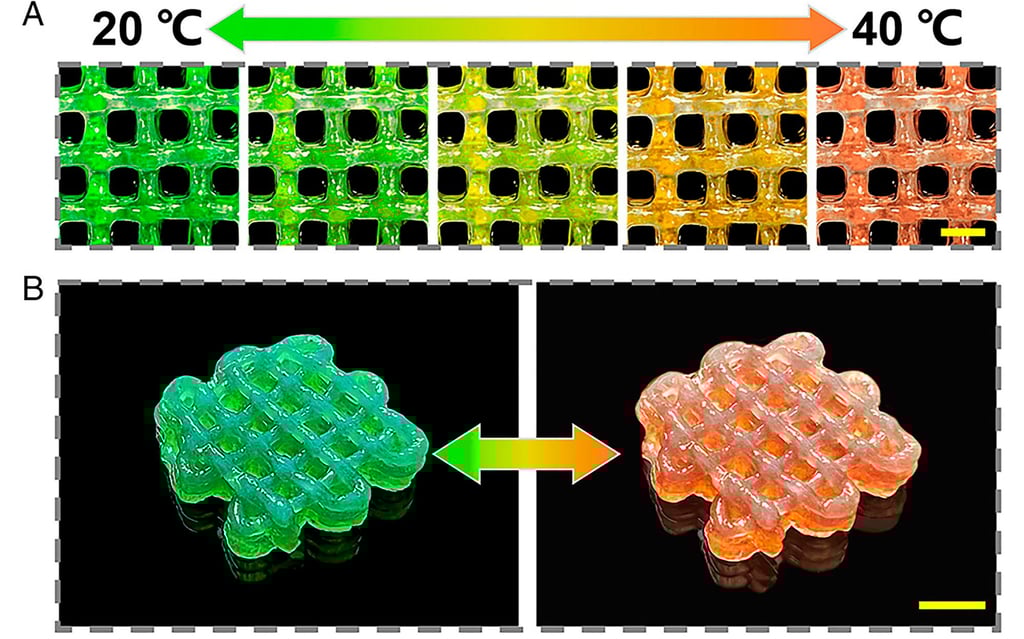
The researchers from Fudan University in Shanghai, Southeast University in Nanjing and the University of Chinese Academy of Sciences in Wenzhou published their findings in the peer-reviewed journal Proceedings of the National Academy of Sciences on Tuesday.
Unlike conventional 3D colour printing ink – which uses dyes or pigments that can fade – the new technology is based on structural colouration, said lead author Shang Luoran, an assistant professor with the Institutes of Biomedical Sciences at Fudan University. That means it produces colours through interactions between light and intrinsic nanostructures.
“Structural colouration, based on the physics of colour, is more stable and the colour will not easily fade. When the material is illuminated, some of the light source’s wavelengths are reflected, creating what we see as colour,” she told the South China Morning Post.
“In nature, this is how vibrant and metallic colours form without pigments on the wings of butterflies and insects, chameleons and some plants.”