‘Giant genes’ shed light on how ‘alien’ crustacean has adapted to the deep sea
- Chinese scientists sequenced the genome of a giant isopod, which has a huge stomach and a large amount of fat stored for energy
- They found it has expanded gene families related to its body size and strengthened growth-related hormone signalling pathways

Chinese scientists say they have discovered “giant genes” in a deep-sea crustacean that could shed light on how it grows so big in a hostile environment.
The giant isopod has a huge stomach and a lot of fat stored for energy, and it also has expanded gene families related to its body size evolution, according to a study by researchers from the Chinese Academy of Sciences’ Institute of Oceanology in Qingdao.
It can grow up to 50cm (19.7 inches) long and is a relative of the sea roach and the land-based pill bug – also known as a woodlouse – both of which are typically smaller than 3cm (1.2 inches).
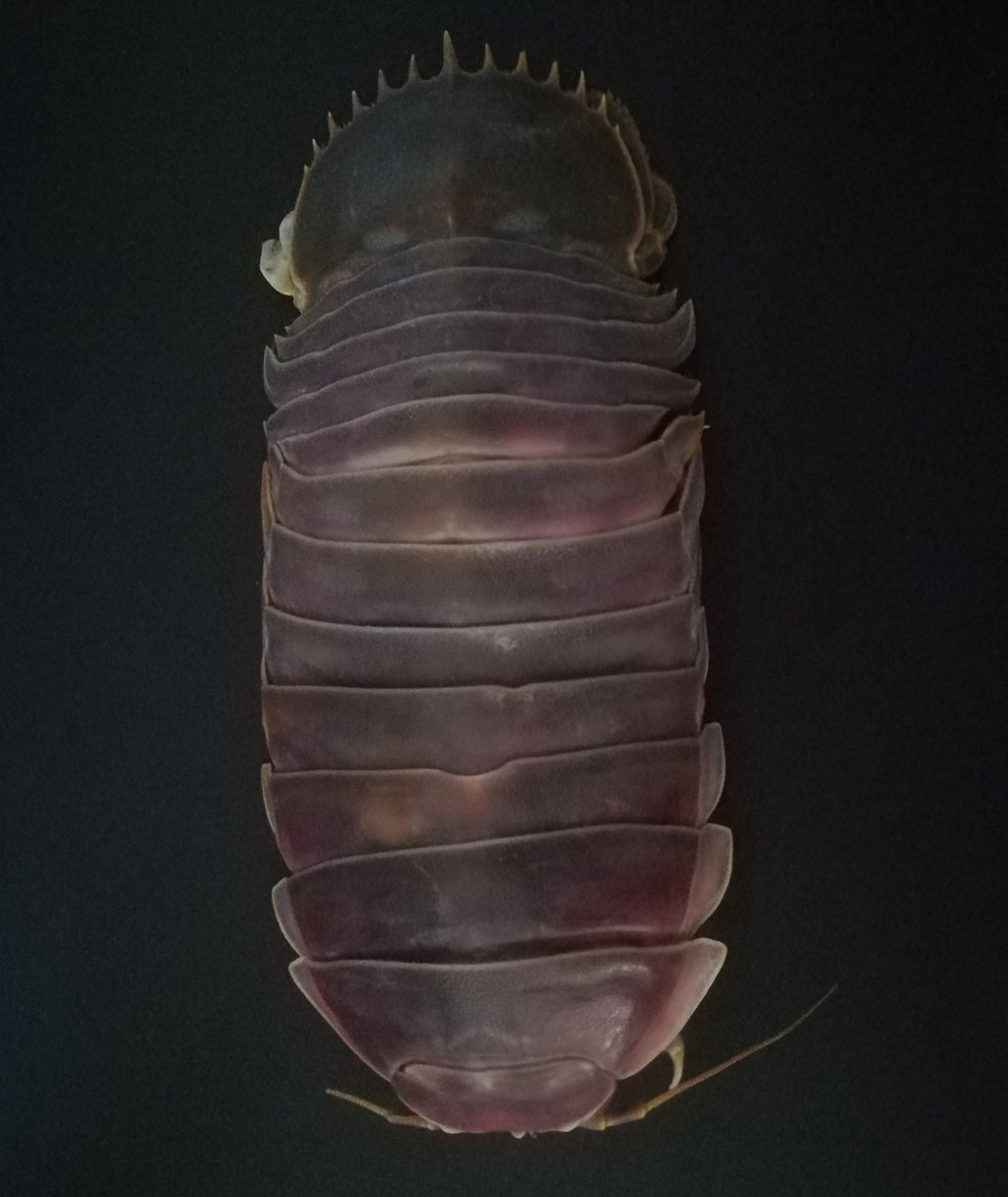
The researchers said the crustacean had also been observed fasting for more than five years – the longest period any animal has been known to fast.
Larger animals usually need more energy, and the extreme deep-sea environment appears to be unsuitable for them given the cold temperature and limited food supply, the team wrote in a paper published in peer-reviewed journal BMC Biology last month.
“The enormous size of giant isopods is a classic example of a phenomenon known as deep-sea gigantism,” the scientists wrote, adding that “isopods from deep sea tend to be larger than their relatives in shallower waters”.
The creature looks quite horrifying – like an alien
To find out how the giant isopod has adapted to the harsh deep-sea conditions, the team sequenced the genome of Bathynomus jamesi – a new species discovered in 2017 near Hainan Island in the South China Sea at a depth of about 900 metres (2,950 feet).