Glowing report from China-led study into wood’s fake-fighting potential
- Chinese and British scientists have found a way to make wood samples glow after exposure to UV light
- The researchers say treated wood powder could be blended into paper or thread as an anti-counterfeit mark

Using commonly available chemical solutions, the scientists treated wood samples to achieve a brief green afterglow.
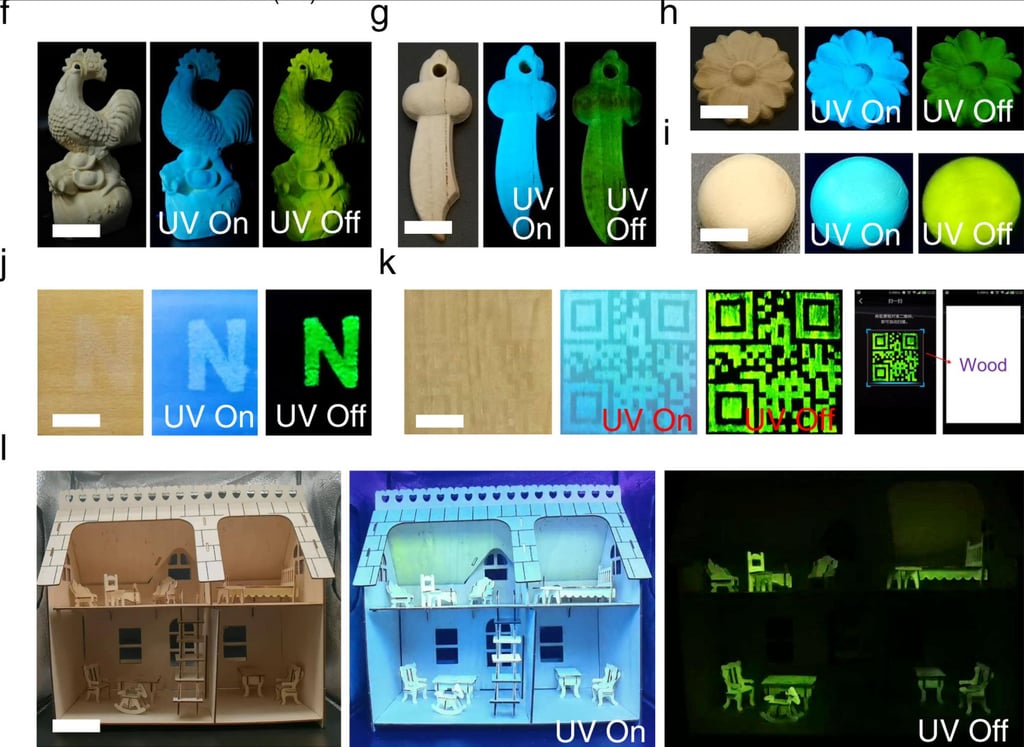
If turned into a powder, the treated wood could be blended into paper or thread as an anti-counterfeit mark to protect documents or branded goods, such as handbags, according to lead scientist Chen Zhijun, a professor with the college of materials science and engineering at the Northeast Forestry University in Harbin.
“If we blend the wood powder into paper for government or confidential documents, an extra material that does not cause harm to the environment, we can distinguish fake documents from real ones from the green glow,” Chen said.
“The same goes for branded goods with embroidery or logos sewn from the special thread,” he said, adding that the afterglow – which lasts one to two seconds after each exposure – can be activated with UV light for an unlimited number of times.
In addition to Chen’s university in China’s most northerly province Heilongjiang, the research team was drawn from the Dalian Institute of Chemical Physics of the Chinese Academy of Sciences, Nanjing Tech University and the University of Bath in Britain.