China successfully tests new engine for Long March 9 rocket
- Developer says technical difficulties have been overcome in first prototype of YF-79 engine
- It will be used for the super heavy-lift rocket designed for missions such as a crewed moon landing

China has moved a step closer to its ambition of carrying out a crewed lunar mission after it successfully tested a new engine for its super heavy-lift rocket.
Technical difficulties have been overcome in the first prototype of the YF-79 rocket engine, which is to be used for crewed moon missions and interplanetary flights, according to its developer, Beijing Astronautics Experiment Institute of Technology (BAEIT).
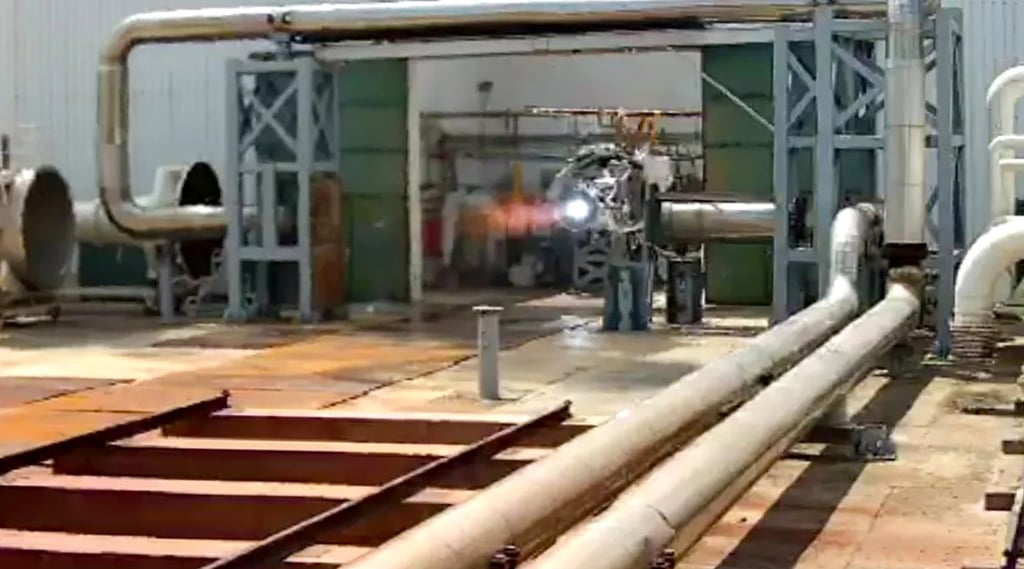
BAEIT said it had conducted 12 ignition tests over a week on the new engine, as well as a high-thrust hydrogen-oxygen engine and an orbital control engine, without giving further details.
“Our teams … shortened the test cycles and increased test capacity, and achieved consecutive successes,” BAEIT said in a statement on its WeChat social media account.
The 25-tonne YF-79 is a thrust expander cycle hydrogen-oxygen engine. It is being developed for the Long March 9, or CZ-9, super heavy-lift rocket – designed for space missions such as a crewed lunar landing and exploration on Mars.
Its developers aim to make the YF-79 the most powerful rocket engine of its type, capable of multiple ignitions and powering a landing probe in its final stage.