Rise of Tibetan Plateau, climate change shaped evolution of Asian mammals, study finds
- Major environmental changes and diverse vegetation ultimately triggered formation of new species, researchers say
- Asia is home to 14 out of 36 of the world’s biodiversity hotspots, but previous studies have been limited

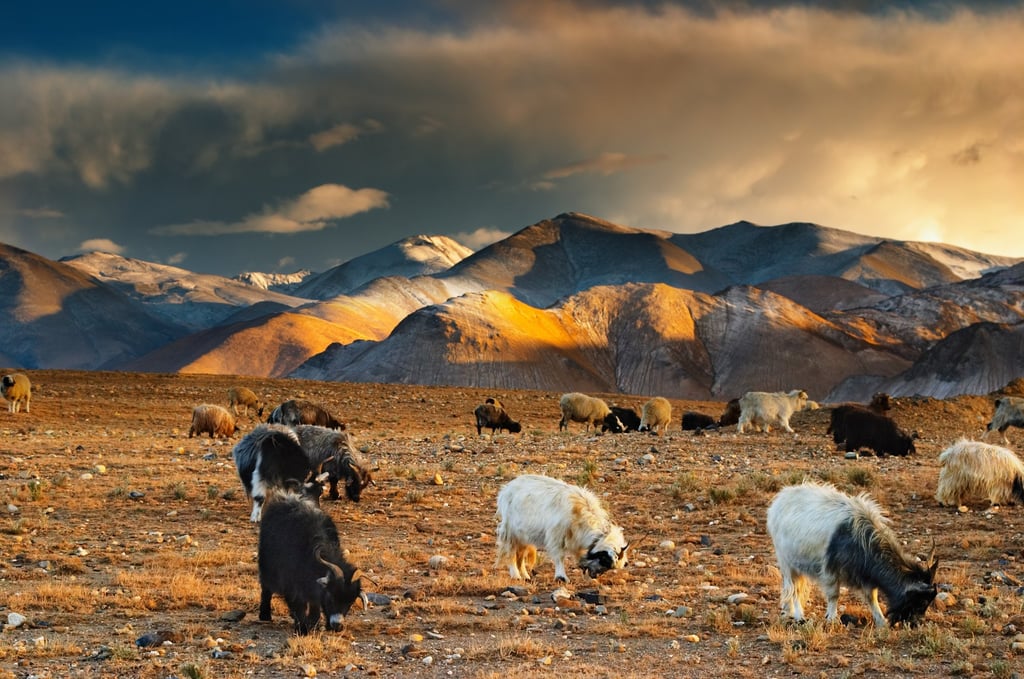
The Tibetan Plateau reached an elevation similar to what it is now about 15 million years ago. Since then, major environmental changes and diverse vegetation along the mountain slopes have ultimately triggered the formation of new species, according to the researchers.
Asia is the birthplace of many extant mammals and is home to 14 out of 36 of the world’s biodiversity hotspots. But previous studies have been limited and a comprehensive understanding of the origin and evolution of mammals in the region has been lacking.
For the study – published in peer-reviewed journal the Proceedings of the National Academy of Sciences on Monday – the researchers built a suite of more than 2,000 historical biogeographic models comprising over 3,000 species in Asia and adjacent continents to investigate their evolution.
“Asia has desert up north, tropical forests in the south, temperate forests in the east,” said Anderson Feijó, the study’s lead author and a researcher with the Chinese Academy of Sciences’ Institute of Zoology in Beijing.
“My idea was to understand how all these regions were connected and how we ended up with different species of mammals in different areas,” Feijó was quoted as saying on the website of the Field Museum of Natural History in Chicago, where he was previously a research fellow.
Bruce Patterson, study co-author and a curator emeritus at the museum, said Asia did not have the most mammal species in the world, but it was a crossroads for connections to other continents, including North America, Africa, Europe and Australasia.