Chinese scientists develop ECG radar that can detect heart health from a distance
- Most ECG devices depend on skin sensors, but a University of Science and Technology of China team has developed a contactless alternative
- Radio wave scanner can detect cardiac motion and transform the data into electrical signals with 90 per cent morphology accuracy, study says

Chinese scientists have developed a radio wave scanner that can detect the heart’s electrical activity from a distance, making remote monitoring of vital signs possible for the first time.
Regular ECG monitoring is known to play a crucial role in diagnosing and preventing heart disease. However, most such devices require sensors, or electrodes, which are placed on the patient’s chest area to record electrical signals from the heart.
Although this allows for efficient monitoring of cardiac health, the need for skin attachment can “restrict the reliability, adaptability and continuity of monitoring”, researchers from the University of Science and Technology of China said.
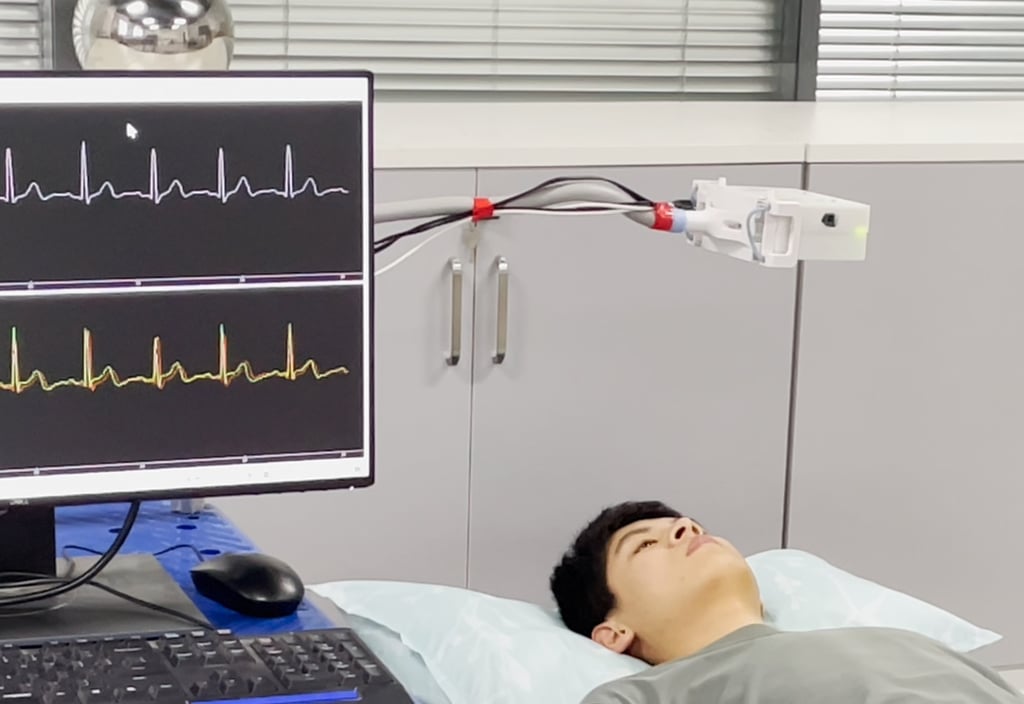
In their new study, the scientists explained how they used a millimetre wave radar to detect the movements of the heart and transform that information into electrical signals. This contactless ECG system could help in the daily monitoring of certain heart diseases, the team said.
It is the first electromagnetic wave-based device to exploit the relation between the heart’s beats and its electrical activity, according to the authors of the study – published in the peer-reviewed journal IEEE Transactions on Mobile Computing in October.
Past studies have demonstrated that radio frequency-based sensing can monitor the heart’s pumping cycles, but solely from its mechanical activity perspective.
The authors designed a series of signal-processing algorithms to extract the 4D cardiac motion signals in order to comprehensively describe the heart’s mechanical activity.