China’s Yellow River flooded 10 times more often in past millennium. New study finds out why
- Human interference caused 80 per cent of increased flooding in river known as the ‘sorrow of China’, study of 12,000 years of data shows
- Structural flood control may boost long-term hazards, lead author says, urging sustainable river management through soil and water conservation

Flooding in China’s Yellow River became 10 times more frequent in the last 1,000 years than in several previous millennia, and it cannot be blamed on climate change, a new study has shown.
Modifications that increased flood risk included clearing vegetation for agriculture in the Loess Plateau, which is the main water and sediment source of the lower Yellow River, and building embankments downstream, according to the study published on Thursday in peer-reviewed journal Science Advances.
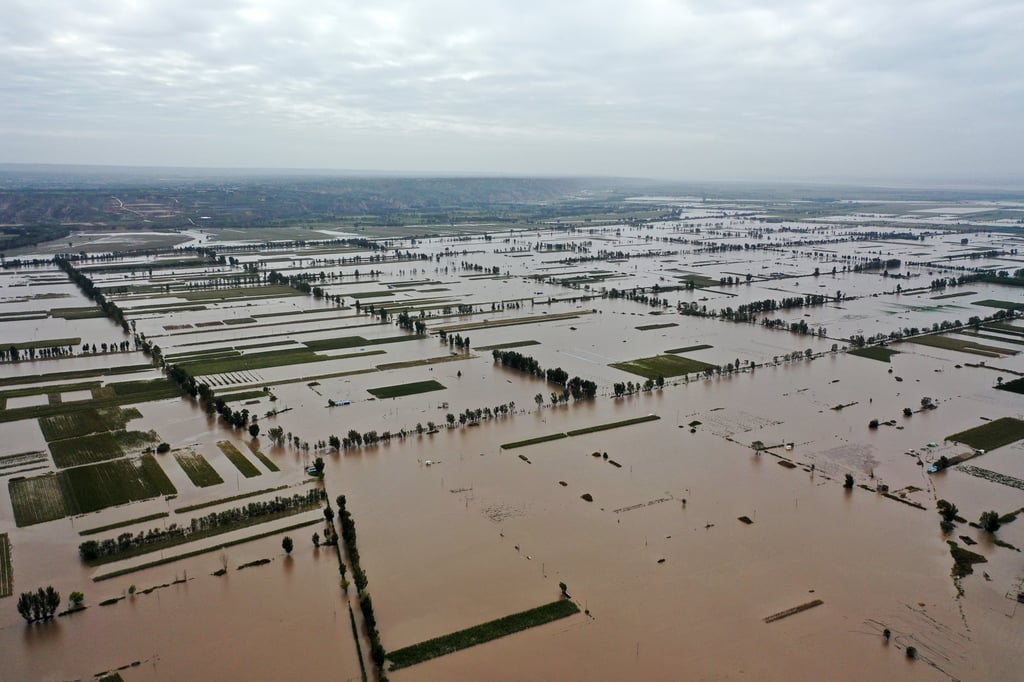
The Yellow River, China’s second and the world’s sixth longest, is called the cradle of Chinese civilisation.
It is also the world’s most sediment-laden river, its fertile floodplains attracting human settlement for centuries and its surrounding landscapes, such as the sediment-rich Loess Plateau in northwestern China, being used for farming.
Historical records, sedimentary radiocarbon dating and statistical modelling informed the study by the team of researchers from Jiangsu Normal University, the University of the Chinese Academy of Sciences (CAS), the CAS’ Institute of Earth Environment and Institute of Tibetan Plateau Research, Beijing Normal University, and Coastal Carolina University in the United States.
Lead author Yu Shiyong, professor at Jiangsu Normal University’s school of geography, geomatics, and planning, noted how the Yellow River had become known as the “sorrow of China” due to frequent flooding since the Western Han dynasty (202BC to 9AD).