Chinese telescopes capture world-leading data to shed light on BOAT cosmic explosion
- When the gamma-ray burst reached Earth on October 9, 2022, scientists around the world mobilised all instruments possible to observe it
- Small Chinese telescope GECAM-C provided the most accurate measurements of the main bursts

About 2 billion years ago in the direction of the constellation Sagitta, a massive star ran out of nuclear fuel and collapsed under its own weight. A black hole was born, driving two powerful jets of particles into space near the speed of light.
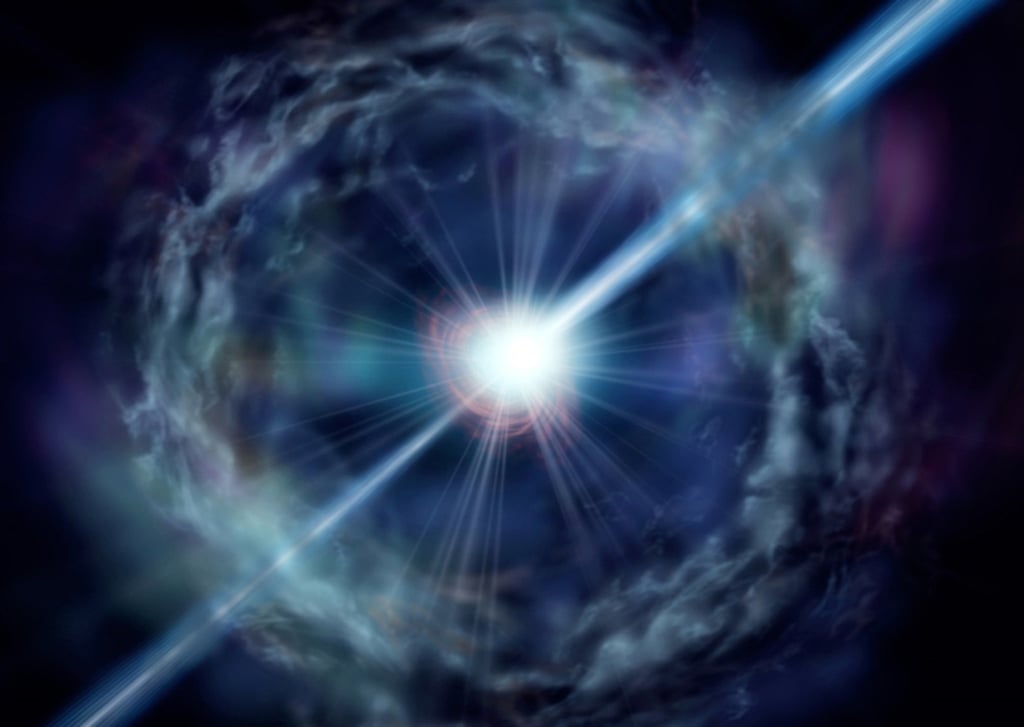
One of the jets, known as a gamma-ray burst, beamed towards Earth and when it reached our planet on October 9 last year, it appeared so bright and spectacular scientists around the world mobilised all the instruments they could to observe the burst.
From the Tibetan Plateau to the Chilean desert, Antarctica and Lake Baikal in Siberia, more than 100 telescopes on all seven continents joined this unprecedented observation campaign. In space, two dozen detectors orbiting Earth, Mars, Mercury – and even Voyager 1 in interstellar space – witnessed the historic event.
The burst – nicknamed BOAT or Brightest Of All Time – was so luminous it effectively blinded most gamma-ray detectors in orbit, including Nasa’s Fermi Gamma-ray Space Telescope, which was the first to spot BOAT and send out observation alerts.

03:23
China to train international astronauts for future trips to space station
Meanwhile, a small Chinese satellite called GECAM-C survived the bombardment of high-energy particles thanks to its orbital position and special operating mode at the time, and directly recorded the intensity of major emissions from the burst.