Advertisement
Chinese scientists join global debate on human embryo research restrictions
- Scientific advances and improved knowledge of the earliest stages of development are prompting a renewed discussion about ethics
- Researchers in several countries are pushing for an extension to the 14-day rule that has dominated since the 1980s
5-MIN READ5-MIN
1

When should a developing embryo be defined and treated as a living entity, and at what point do scientists risk taking a human life during their research?
These fundamental questions are being reconsidered by scientists, ethicists and policymakers around the world, with renewed discussions driven by rapid scientific advances and the lure of exploring the unknown.
The global rule adopted by China, the US, Britain, France, Spain and a host of other countries – that human embryos cannot be kept alive in a laboratory beyond 14 days – was theoretical when it was introduced in 1984.
Advertisement
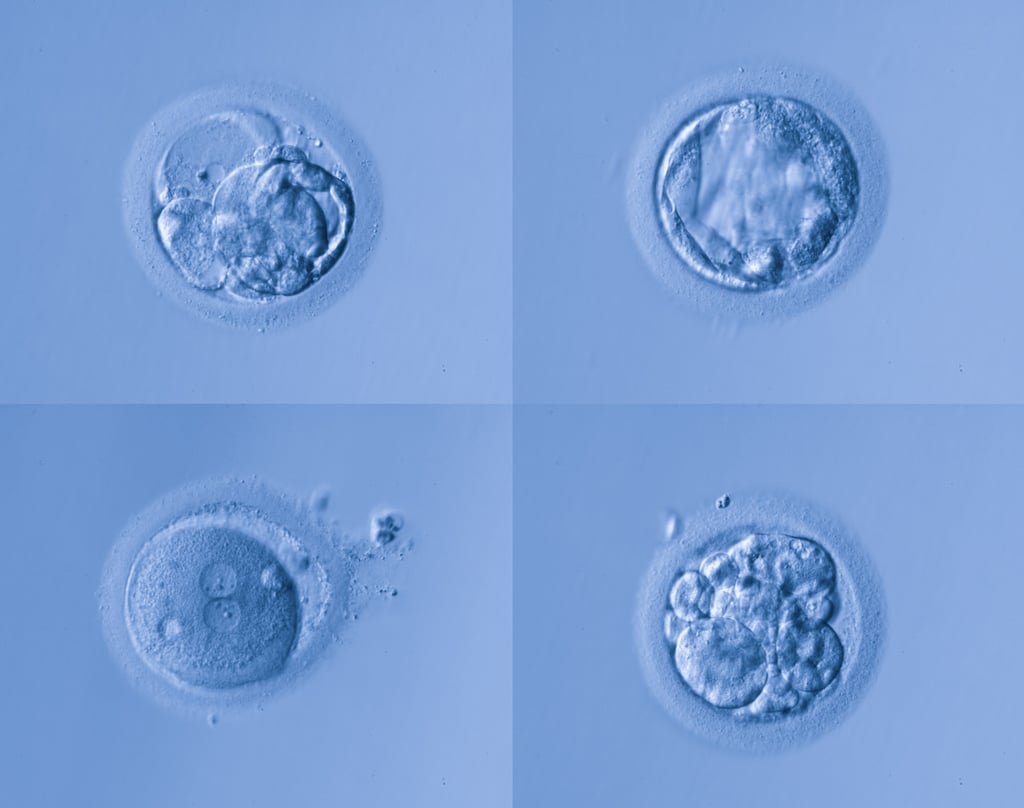
But in the past five years, a growing number of labs – including some in China – have been able to push the cultivation process from just a few days to within reach of the 14-day limit.
Loosening the restrictions
In 2021, the US-based International Society for Stem Cell Research (ISSCR) became the first scientific body to try and loosen the restriction, with a new guideline suggesting a longer period of embryo culture could be acceptable.
Advertisement
Advertisement
Select Voice
Select Speed
1.00x