China launches Shenzhou-20 spacecraft with superconductor tests, space debris defences
On board Tiangong space station, crew trio will conduct cutting-edge experiments on tissue regeneration, human-machine collaboration systems

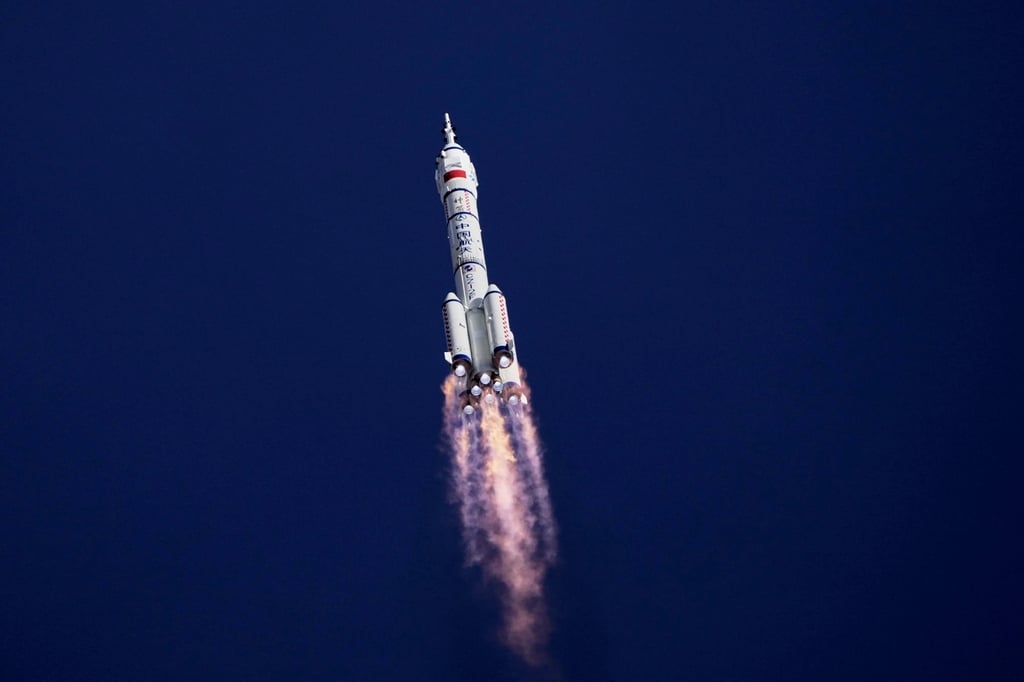
The Shenzhou-20 spacecraft lifted off atop a Long March 2F rocket from the Jiuquan Satellite Launch Centre in northwestern China at 5.17pm local time on Thursday, according to the China Manned Space Agency (CMSA).
The launch was confirmed successful by officials at 5.36pm after the spacecraft entered orbit.
During their mission, the crew will conduct science experiments that include preparing high-temperature superconducting materials in space, and regeneration in planarians – a type of flatworm capable of regenerating its organs – which could lead to insights on solving human health problems in space, such as injuries.