Eliminating mosquitoes not enough to fight China’s chikungunya fever outbreak, experts say
Chinese scientists urge authorities to monitor chikungunya fever-carrying mosquitoes and transmission patterns to prevent spread of disease

Chikungunya fever is a viral disease transmitted by the Aedes mosquito. While rarely fatal, it can lead to symptoms such as fever, rash and joint pain. The combination of heat, humidity and rain has created a favourable environment for mosquitoes to thrive and spread the disease.
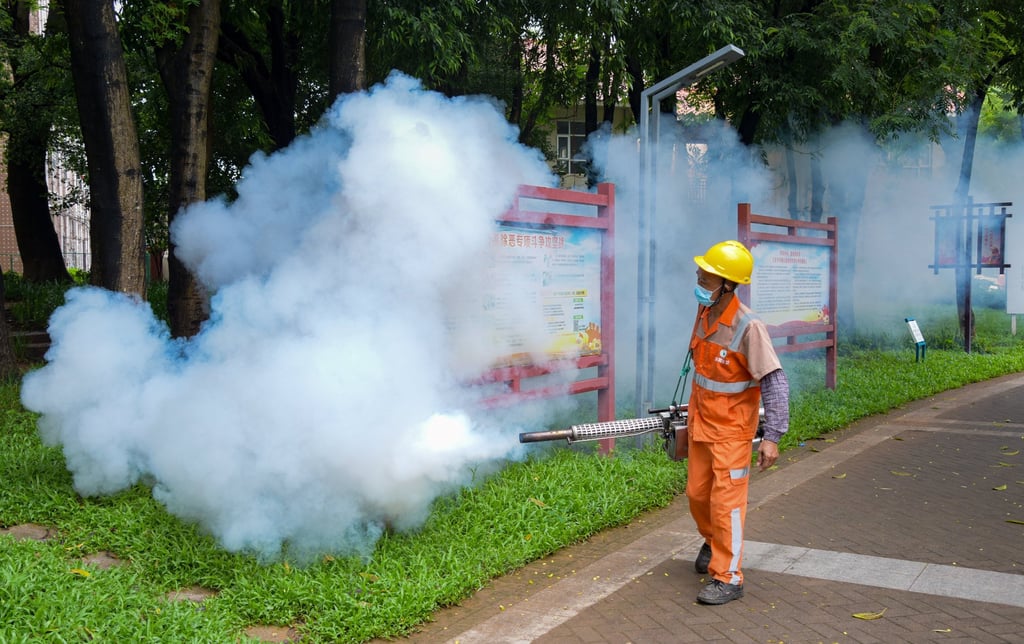
In Foshan, the centre of the outbreak, some health authorities have penalised businesses, including hotels and restaurants, for failing to promptly eliminate mosquito breeding sites, according to state-run news site Southcn.com.
However, Jin Dongyan, a professor of biomedical science at the University of Hong Kong, said the efforts to kill all kinds of mosquitoes in the cities, including those in homes and shops, may be missing the target because most of them did not carry the virus.
Chikungunya is most commonly transmitted to humans through the bites of infected female mosquitoes including Aedes aegypti and Aedes albopictus, which can also transmit the dengue and Zika viruses. However, Aedes aegypti is rarely seen in Guangdong, according to Jin.