YJ-19, China’s first hypersonic cruise missile, is based on breathtaking science
The air-breathing weapon’s expected appearance at the WWII commemorative parade will be a global public debut for the technology
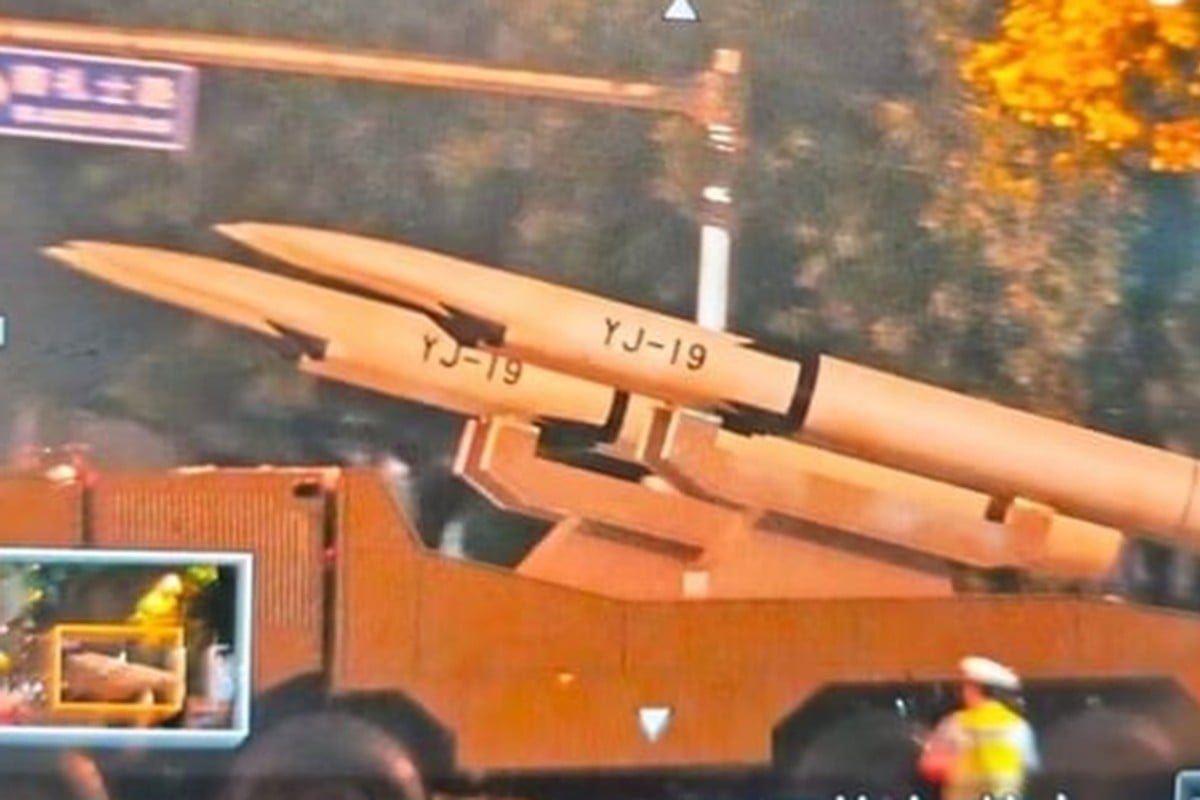
The simultaneous appearance of the YJ-15, YJ-17, YJ-19, and YJ-20 anti-ship missiles showed China’s growing capability in integrated systematic operations. But it was the YJ-19, with its visible air inlet, that represented the most cutting-edge aerospace technology.
There are two primary approaches to achieving reliable hypersonic flight, with both methods needing to overcome extreme technical challenges under the severest conditions.
The YJ-19 is believed to use the alternative – an engine powerful enough for sustained propulsion, which is likely to be a scramjet that takes in air during high-speed flight and mixes it with fuel to produce thrust.
While the first approach gives the missile a relatively predictable trajectory during its ascent phase, it becomes irregular when gliding. The second method combines speed and mobility throughout the flight.