Bronze Age cemetery offers clues on how ancient Chinese brewed red rice wine
Vessels found in tombs at Mogou in modern-day Gansu contain traces of a fermentation starter of the type still used to make sake today

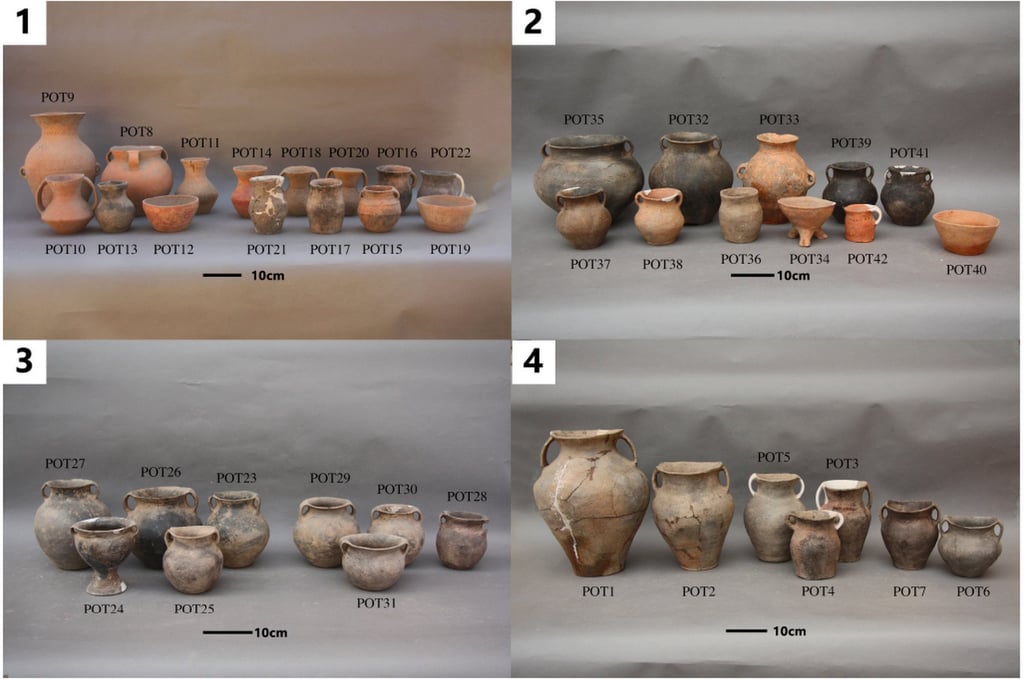
Traces of alcohol in pottery vessels discovered from a Bronze Age cemetery in northwestern China indicate that people at the time consumed beverages made using a fermentation starter of rice and a red mould.
Archaeologists said the drink, similar to red rice wine, played a key role in mortuary rituals, and its presence at the Mogou cemetery suggested a tradition that probably served to strengthen the bond between the living and the dead.
Researchers from Northwest University in Xian, the Gansu Provincial Institute of Cultural Relics and Archaeology, and Stanford University in California published their findings in the peer-reviewed Journal of Archaeological Science: Reports.
The site, located in today’s Gansu province on the northeastern edge of the Tibetan Plateau, was in use for 600 years from 1700 to 1100 BC. The cemetery, where 5,000 people were buried, was excavated between 2008 and 2012.
The researchers described an alcohol fermentation method that used a starter – known in Chinese as qu – made up of cereals, moulds and yeasts.
While malt-based fermentation relies on the enzymes produced during cereal germination and added yeast to produce alcohol, when a starter is used it generates the yeast and enzymes itself from the microbes it contains.