
Revisiting the peaks of Nobel laureate Chen-ning Yang’s remarkable career
The inspirational Chinese physicist, who lived to the age of 103, was renowned for two historic achievements

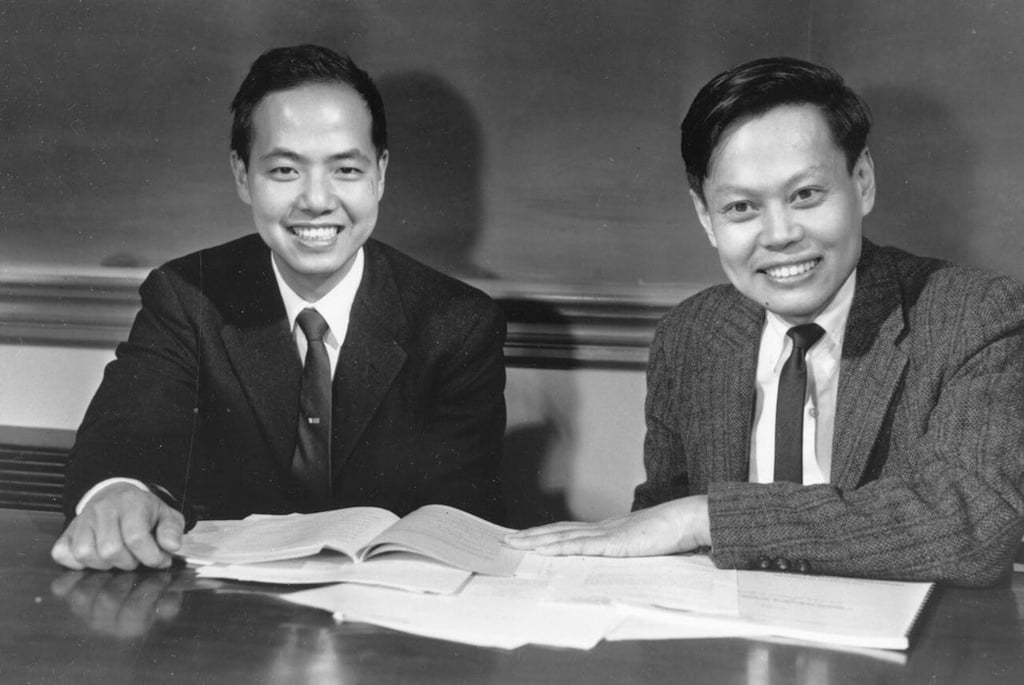
The landscape of Yang’s work features many peaks, but two tower above all: the discovery in 1954, together with Robert Mills, of what became known as the Yang-Mills equations; and the Nobel Prize-winning suggestion in 1956, together with Tsung-Dao Lee, that the weak interactions violated parity (left-right) symmetry.
These were historic achievements and they deserve to be seen that way. Thus inspired, let’s do some sightseeing.
In 1889 Heinrich Hertz wrote that “these mathematical formulas have an independent existence and an intelligence of their own, that they are wiser than we are, wiser even than their discoverers, that we get more out of them than was originally put into them”.
For Hertz, this was not a philosophical flourish but a lived truth. James Clerk Maxwell’s system of equations, first set down in 1864, brought electricity, magnetism and light within a single elegant structure.