Composite tool find puts China at centre of tech revolution up to 160,000 years ago: paper
Team says discovery of 2,600 stone tools, including hafted tools, reshapes understanding of human evolution in eastern Asia

China may have led a Stone Age technological race as early as 160,000 years ago, by crafting sophisticated stone tools for cutting, piercing and sawing, according to a new study.
An international team of scientists said the discovery of hafted tools – the earliest evidence for composite tools in eastern Asia – had reshaped the understanding of human evolution in the region.
They said the find showed that hominins in China were much more inventive and adaptable than previously thought, challenging the widely held belief that “hominin technologies in eastern Asia lack signs of innovation and sophistication” in the later part of the Middle Pleistocene.
The researchers from institutions in Australia, China, Norway, Spain and the United States published their findings in the peer-reviewed journal Nature Communications on Tuesday.
“Earlier records, such as the evidence from Xigou, challenge this dominant paradigm and show that hominins in China from the Middle to Late Pleistocene possessed the cognitive and technical abilities to produce complex and diversified items of material culture, compatible with their counterparts from other regions of Africa and Eurasia,” the team wrote.
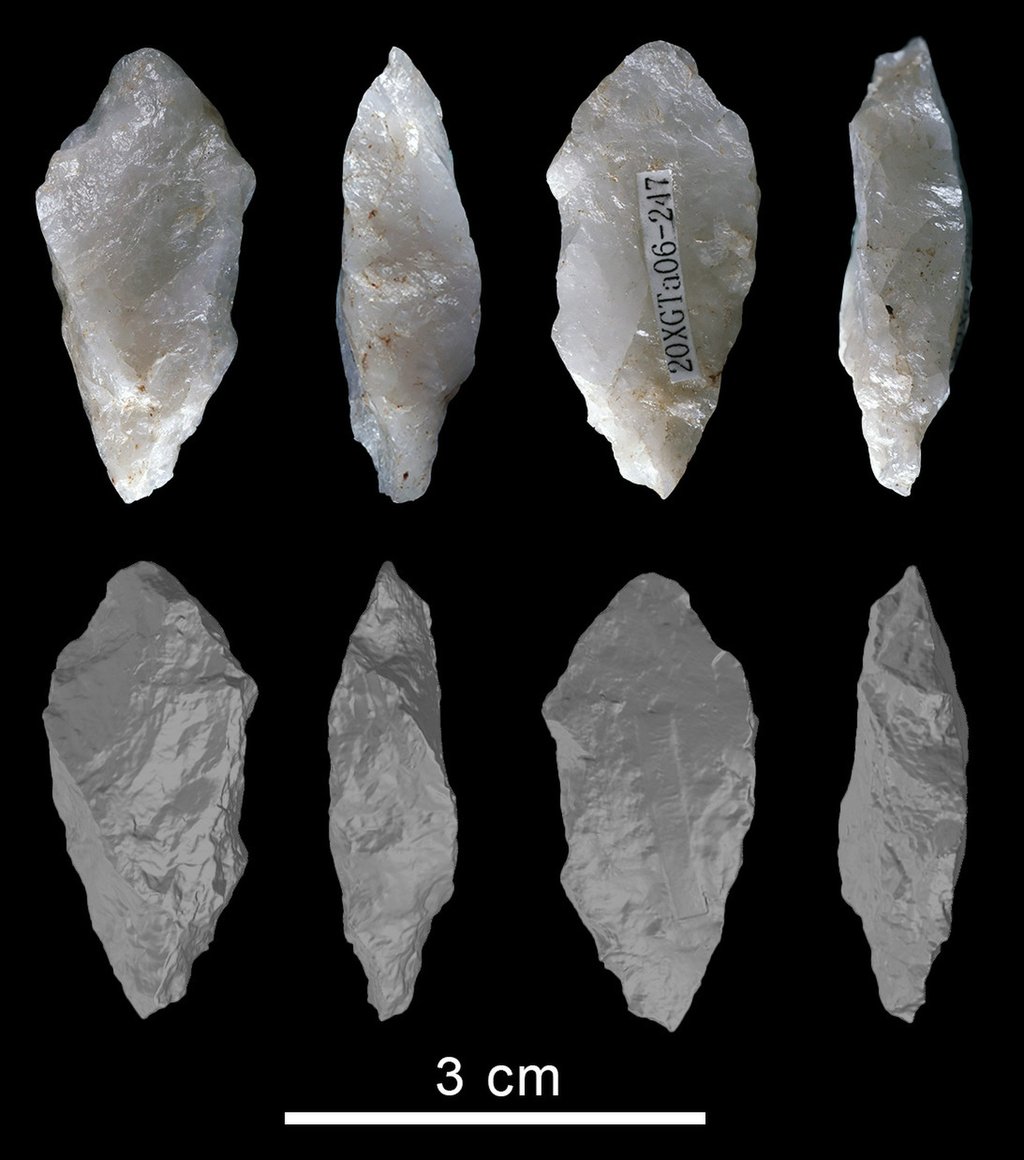
Xigou, an archaeological site discovered in 2017 and excavated from 2019 to 2021, is in the central Chinese province of Henan.