-
Advertisement
Science
ChinaScience

‘Two sessions’, two paths: China prioritises AI integration amid US tech rivalry

Beijing’s open-source push in focus ahead of annual legislative meeting and coming five-year plan, as Washington chooses different approach

3-MIN READ3-MIN
Listen
The US has sought to slow China’s tech development, mainly through blocking the export of advanced chips used to power AI. Photo: Shutterstock Images
Victoria Bela

Artificial intelligence will be a focal point of the scientific agenda at Beijing’s annual legislative meeting and coming five-year plan, as China and the US pursue divergent AI paths putting their tech ecosystems at odds.

Just over a year ago, Chinese start-up DeepSeek released an open-source AI model that changed how the world viewed the country’s AI capabilities and ambitions.

Chinese companies have embraced an open-source approach to AI development, which has rapidly scaled usage of their models worldwide and sped up AI adoption across domestic industries, including healthcare, energy and transport.

Advertisement

Meanwhile, US-based companies have largely followed a closed-off, paid approach that may limit how these models become integrated into daily life and slow the adoption of advanced AI-reliant technologies.
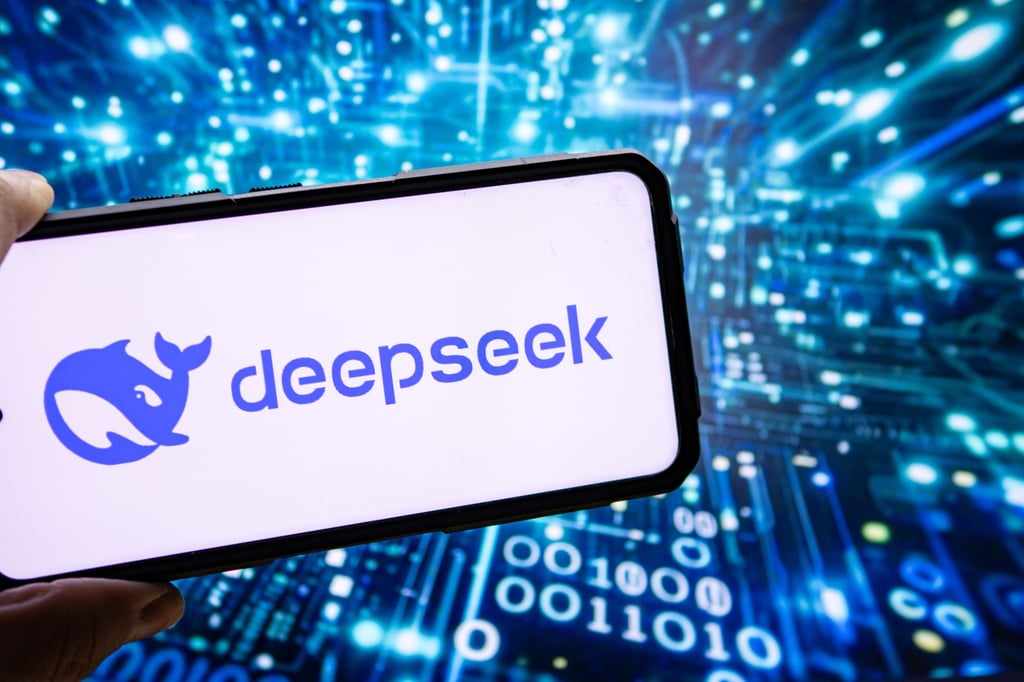
An open-source AI model developed by the Chinese start-up DeepSeek has changed how the world views the country’s AI capabilities and ambitions. Photo: Shutterstock
Last month, Anthropic accused DeepSeek, along with fellow Chinese AI companies Moonshot and MiniMax, of extracting the capabilities of its Claude model to improve their own models.
Advertisement
Advertisement
Select Voice
Select Speed
1.00x