For 5 million years, whales have come to this place in the Indian Ocean to die
Graveyard discovered by Chinese team is Earth’s deepest and most extensive for whale fossils, carcasses and the ecosystems they support

The graveyard is the Earth’s deepest and most extensive known accumulation of whale fossils, carcasses and the unique ecosystems they support, with some fossils dating back about 5.3 million years.
Detailed in a paper published in the peer-reviewed journal Nature on Wednesday, the study was conducted by researchers from the CAS Institute of Deep-Sea Science and Engineering in Sanya, an island city in southern Hainan province, in collaboration with researchers from the University of Pisa and Earth Sciences New Zealand.
“These findings reshape the understanding of the limits and biogeography of whale-fall ecosystems and establish some deep-sea floors as a fossil archive for tracing cetacean evolution over geological time,” according to the paper.
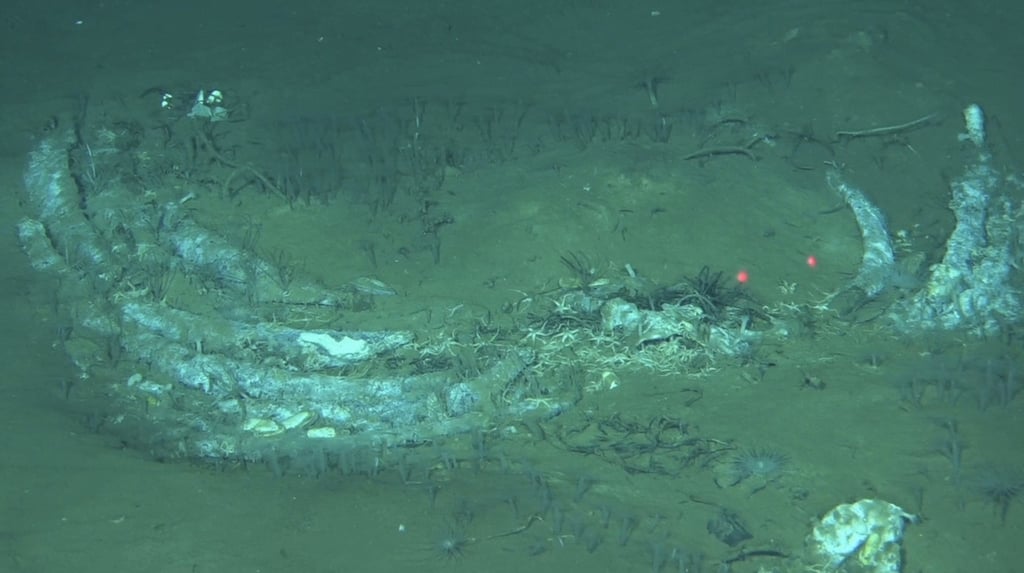
When a whale dies, it triggers a rare natural phenomenon known as a whale fall. The carcass may drift on the surface for a time, attracting sharks and other predators, before gradually sinking to the ocean floor, where it is consumed by deep-sea scavengers.