Long before the Silk Road, silkworm cocoons already existed in Uzbekistan
Some 4,000 years ago, ancient people brought the production technique for the precious luxury from China to Central Asia via India

In 138BC, Chinese diplomat and explorer Zhang Qian was sent as an envoy to the western regions.
The land route started from Changan, present-day Xian, and passed through Gansu province and the Xinjiang Uygur autonomous region, reaching Central and West Asia, and connecting various countries along the Mediterranean.
Among the goods traded along this long route, Chinese silk was the most representative, which was how the Silk Road got its name.
Traditional historical scholarship holds that sericulture and silk-reeling technology originated in China 8,500 to 5,000 years ago and spread outward along the Silk Road in the 2nd century BC.
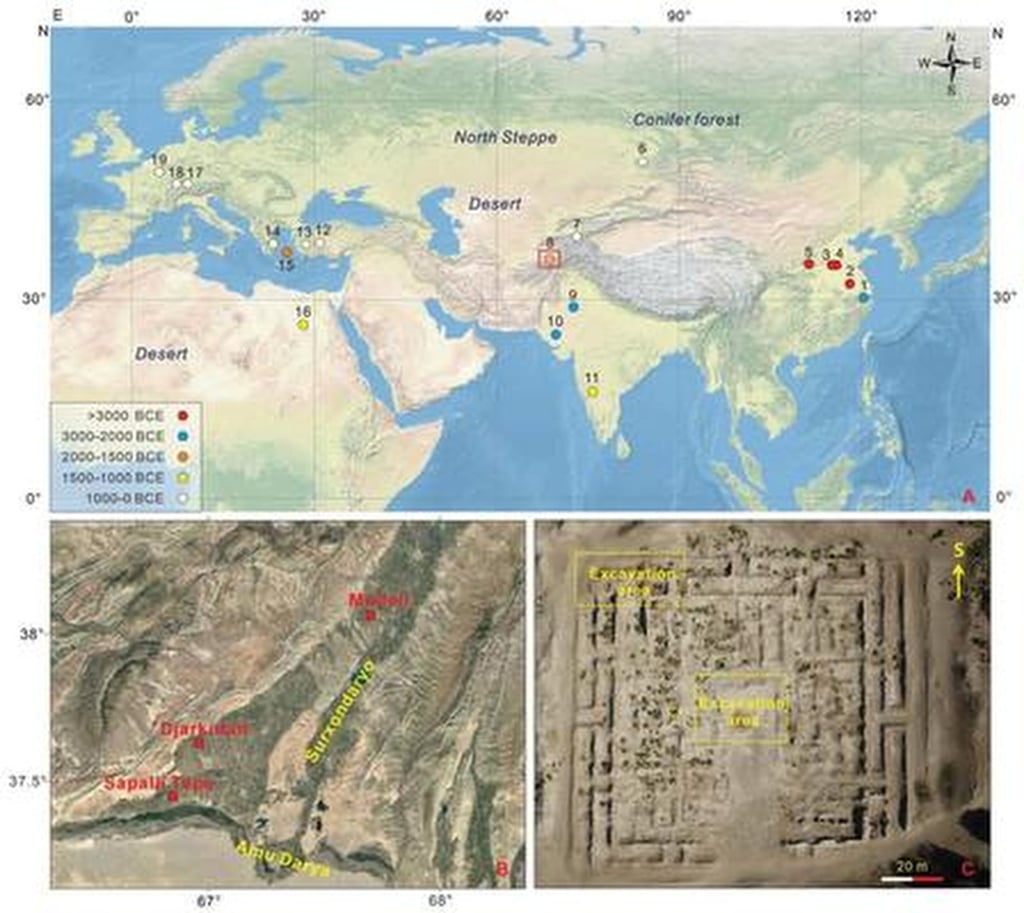
However, a recent archaeological discovery by Chinese scientists in Uzbekistan has revealed that silkworm cocoons and mulberry trees already appeared in the region more than 2,000 years before the Silk Road opened.