China team unearths world’s oldest amber, hidden in ancient Xinjiang coal seam
Ancient plants were capable of producing resin to protect themselves 65 million years earlier than previously thought, study finds

Until now, the oldest known amber to have been isolated from rock and confirmed through chemical analysis dated to the Late Carboniferous period, around 320 million years ago, when the first herbivores also emerged.
The researchers, led by Luo Cihang, from the Chinese Academy of Sciences’ Nanjing Institute of Geology and Palaeontology, detailed their findings in a paper published by the peer-reviewed journal Science Advances on July 15.
According to the paper, the palaeontologists were initially sceptical when they found hundreds of microscopic pieces of what appeared to be amber preserved in a coal seam dating from the Middle Devonian period around 393 million to 383 million years ago.
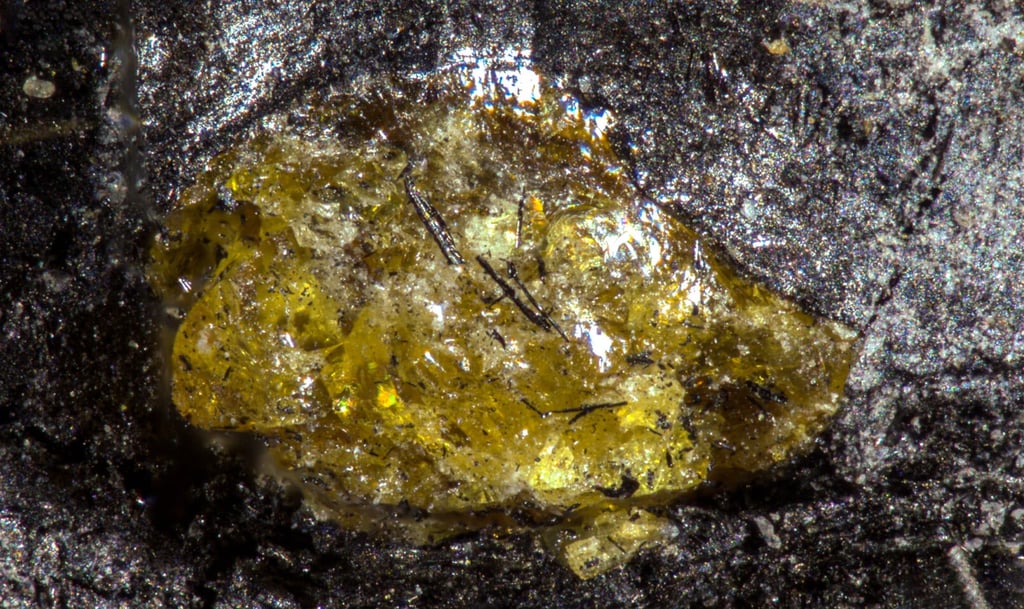
When Luo and his team travelled to Xinjiang in 2019, they did not expect the fossil samples they planned to examine and collect from the region’s unusual coal seam would yield the world’s oldest known amber, the paper said.