China’s ‘airpocalypse’ a product of climate change, not just pollution, researchers say
Beijing in a double bind: it must instigate clean-up to restore public’s faith, but its measures may prove useless as climate continues to unravel

China’s notorious smog problem may have been worsened by climate change in the polar regions, according to a study published in the United States on Wednesday.
According to the study published in the US journal Science Advances, the findings may provide some clues why China’s smog problem has failed to ease despite cuts in pollution-causing emissions.
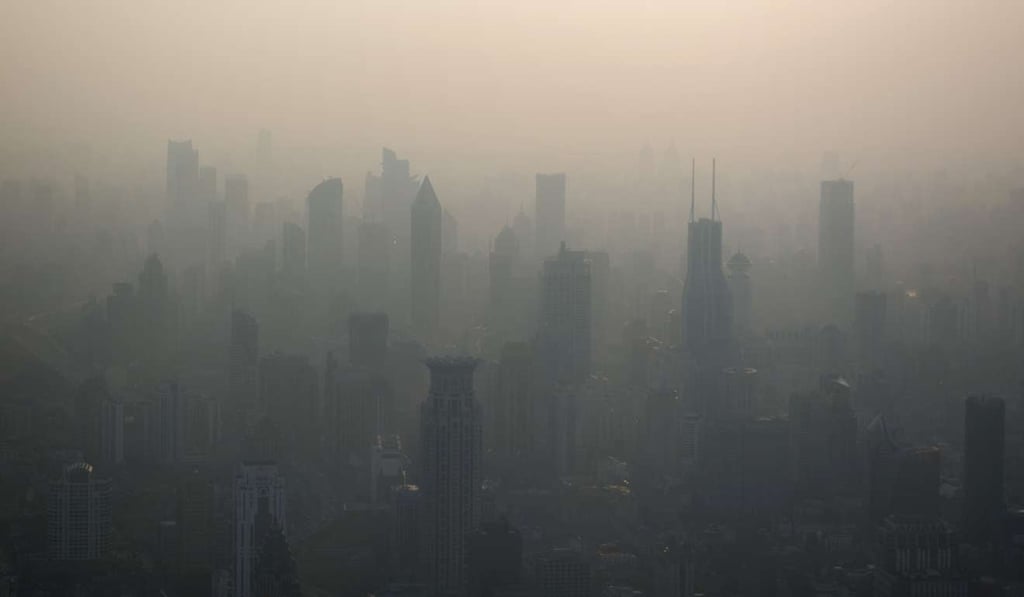
When analysing the impact of global warming on regional pollution, researchers from Georgia Institute of Technology found that the level of hazardous PM2.5 particles over Beijing and other cities in the east China plain in the winter of 2013, the worst smog in more than five decades, followed record melting of sea ice in the Arctic and record high snowfall in the upper latitudes of the Eurasian continent.
Computer simulations suggest connections between these events. Melting ice around the North Pole and increasing snowfall in Siberia reduced the amount of cold air, impeded its southerly route and contributed to China’s severe air pollution, according to the researchers.