Supply chains of despair: how our devices are creating toxic mountains
Renowned US documentary maker Sue Williams says the blame for e-waste stretches all the way from manufacturers to consumers

Sue Williams, a New York-based documentary filmmaker, has spent much of her career making films about China. Starting in the 1980s, she has made five feature-length documentaries depicting China’s modern history from the 1911 revolution to the story of the restless young generation before the 2008 Beijing Olympic Games.
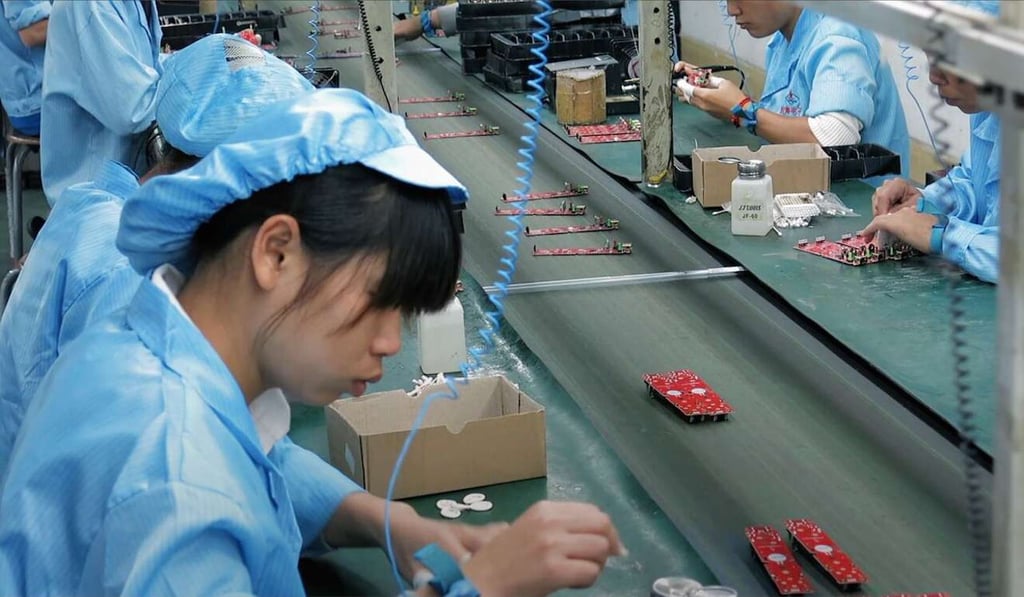
Death by Design, her latest film, is partially about China’s electronics industry that is tarnished by sweat-shop working conditions and environmental pollution. But the story touches more on the problems within global supply chains – tracing them back to Silicon Valley in California, a tech hub still haunted by toxic chemical leaks from US computer chip makers three decades ago, and following entrepreneurs around the world who are trying to reduce and recycle the world’s mountains of electronic waste.
What is the context of the documentary and what do you want to tell the audience?
About five years ago I met Ma Jun [a well-known Chinese environmentalist and investigative journalist, who founded the Institute of Public and Environmental Affairs]. I was really interested in his work and so impressed with what he was doing. At first, I thought of just doing a portrait of Ma Jun. But as I looked into the electronics industry, I saw a much bigger story than just China.
The explosion of the electronics industry coincided with the opening of China
One thing that struck me was that the explosion of the electronics industry coincided with the opening of China. And that gave the industry the possibility to make things on a scale that wouldn’t have been possible in the US. So I decided to look at what happened to the industry in the US, and I found the horrible story of Silicon Valley in its early days. That history is important because it shows that when those companies came to China, they knew what would happen. They knew they were going to pollute the environment, to make workers sick, to poison communities. I felt that was an important story to tell.
Some people blame the e-waste problem on globalisation, particularly the outsourcing of production and waste disposal. How does globalisation change manufacturing?
It’s made easier for [e-waste] to be in someone else’s backyard. Americans don’t care if it’s in someone’s backyard. Nor do Europeans, Chinese or anyone. If you don’t see it, it’s not very meaningful for you. So who cares about Guiyu township [one of the world’s largest e-waste dismantling sites, in Guangdong province] or families there who are making a living dismantling e-waste. But if you make things properly, without the toxic elements in the beginning, they wouldn’t be there at the end when they are being taken apart. So it’s partly globalisation, but mostly it’s about corporate greed.
Who, then, should be responsible?
Everyone. Me and you. We all use devices, so we are all implicated. I think brands need to be responsible for how they make things. They need to be transparent. They all talk about how green their offices are, but they don’t talk about how their supply chains are green. It’s easy to make an Apple Store green. It’s a lot harder to make chip makers green. And that, as I said earlier, will take will and determination.