How deer of China’s emperors was brought back from the dead
Milu deer disappeared on the mainland, but were reintroduced from breeding stock overseas in a rare conservation success story in China

The newborn fawn walks unsteadily among the trees that were once part of the Chinese emperor’s hunting grounds and where more than a century before its forebears died out in their native China.
This April marks the start of the birthing season for the Milu deer, which has long been famed as having the head of a horse, the hooves of a cow, the tail of a donkey and the antlers of a deer. As the herds across China grow each spring, they mark a rare conservation success story in a country suffering from pollution and other environmental challenges.
“Our protection of the Milu is about protecting our living cultural heritage and natural heritage,” said Guo Geng, vice-director of the Beijing Milu Ecological Research Centre, where they expect about 30 fawns this year. Known as Pere David’s Deer in the West, the Milu’s significance to Chinese culture is embodied in its appearance in ancient Chinese poems and writings.
“But if, outside of books, they become extinct, then the next generation will be extremely regretful,” said Guo.
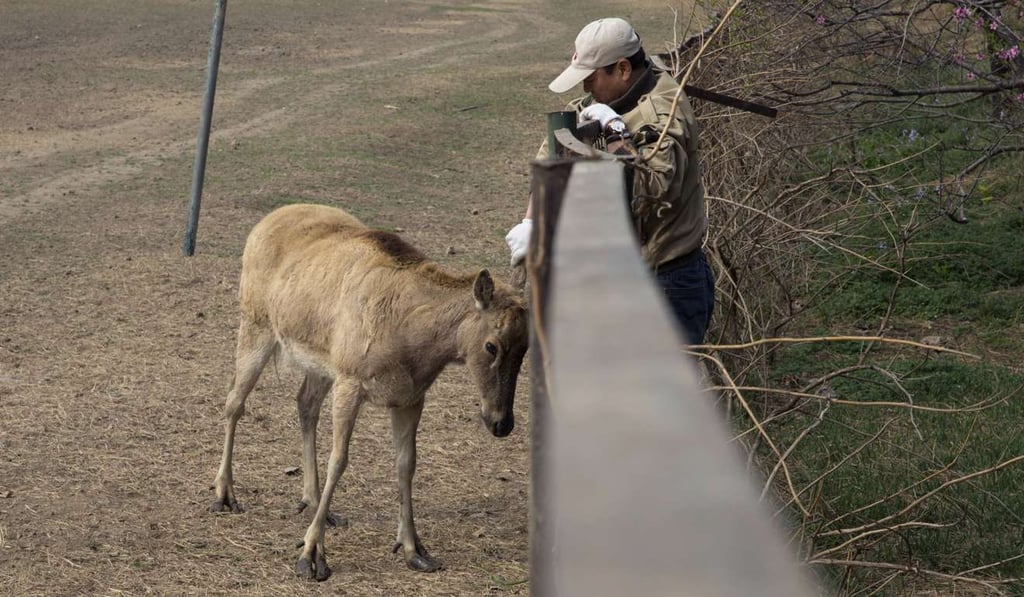
The deer, which had roamed China’s marshlands for thousands of years, were among the animals brought from around China to live within the emperor’s hunting grounds in what is now the south of Beijing during the Yuan, Ming and Qing dynasties (1279-1911). The number of Milu deer living in the wild waned due to loss of habitat, before finally dying out in 1900 in the hunting grounds. These were flooded and then overtaken by soldiers from the eight nations brought in to suppress the Boxer Rebellion, who slaughtered the deer for food.