China’s ‘maritime Silk Road’ has become a hotspot for lightning strikes, US scientists suggest
Pollution from vessels in busiest shipping lanes of South China Sea and Indian Ocean making storms more intense, study says

China’s “maritime Silk Road” has become a lightning hotspot, according to a new US study that suggests a link between ship exhaust and thunderstorms at sea.
The joint research project by scientists at the University of Washington in Seattle and Nasa found major shipping lanes in the South China Sea and Indian Ocean saw twice as much lightning as nearby waters without the heavy traffic.
The two waterways have some of the busiest cargo transport routes on the planet, according to the researchers, who studied the locations of 1.5 billion lightning strikes from 2005 to 2016. A study by the Centre for Strategic and International Studies in the US said that more than US$3 trillion worth of goods passed through the South China Sea last year alone.
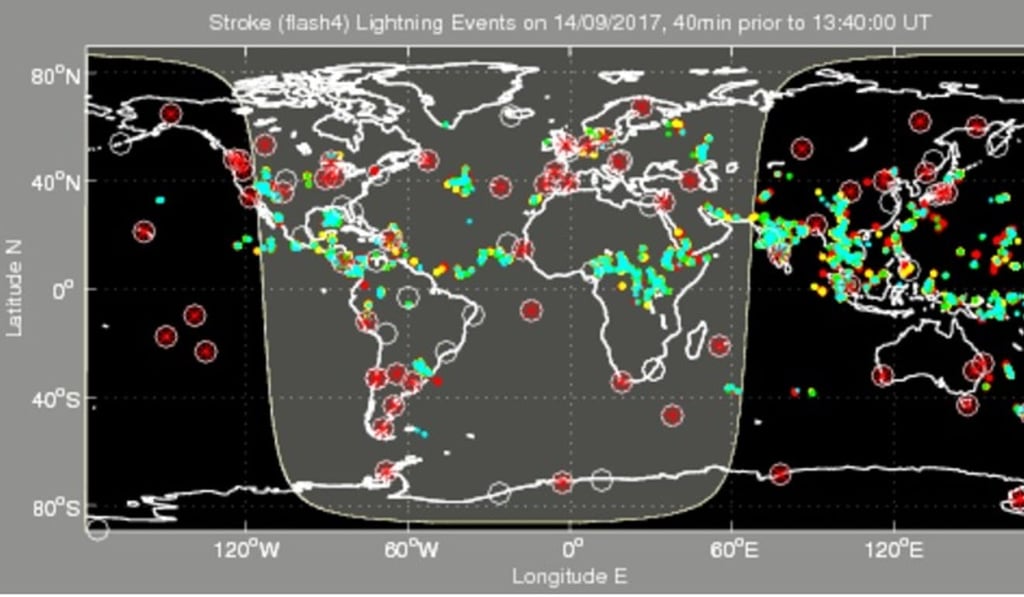
The scientific study, which was published last week in the journal Geophysical Research Letters, looked at the relationship between lightning strikes and ship emissions based on 12 years of data collected by the World Wide Lightning Location Network.
Joel Thornton, an atmospheric scientist and lead author of the study, said it had provided some of the best evidence yet of how human activity could affect the intensity of storms.
The science is this: Ships burn fossil fuels and emit pollutants into the air. For clouds to form there have to be particles onto which water droplets can condense. The more particles there are, the more cloud droplets that form, but their average size is smaller because the water is more widely distributed.
The smaller the cloud droplets, the higher into the atmosphere they climb where they are more likely to turn into ice. Icy droplets generate more friction, which drives up the electric charge and results in more lightning.