Has Chinese machinery helped North Korea to achieve surprise crop growth despite worst drought in decades?
Most food production areas in the hermit state achieved normal plant growth by mid-August even though it saw record low rainfall , Chinese scientists say

North Korea appears to have emerged almost unscathed from its worst drought in nearly two decades in a sign of massively improved agricultural capability, according to Chinese scientists.
Except for a few isolated regions, most food production areas in North Korea achieved “normal” plant growth by mid-August, CropWatch reported.
CropWatch is a global crop monitoring system run by the Institute of Remote Sensing and Digital Earth at the Chinese Academy of Sciences in Beijing. Its findings – used by the Chinese government for decision making in domestic and international affairs since 1998 – are based on a computer analysis of data from satellites and ground stations, according to the project’s website.
A CropWatch map on agricultural production in China and its neighbouring countries showed that nearly all farms in North Korea were green. That meant that plants are growing as well as they did on average in the last five years.
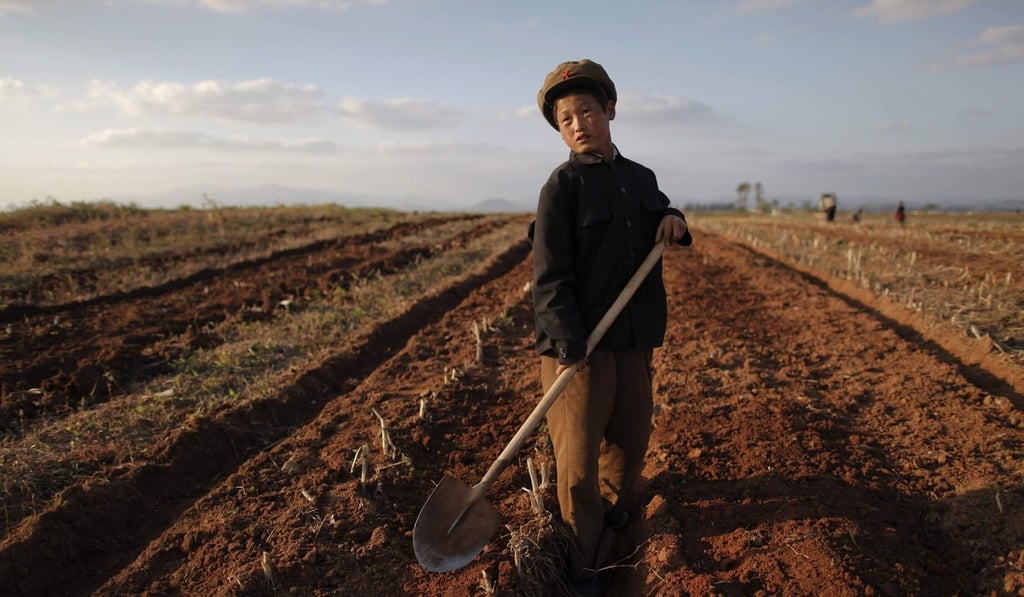
That conclusion comes as a surprise since rainfall in key crop production areas in North Korea from April to June dropped to the lowest level since 2001, the Food and Agriculture Organisation of the United Nations reported in July.
The 2001 drought caused a famine in the following year that forced hundreds of thousands of North Koreans to abandon work and school and go “up into the mountains in search of edible grasses,” according to the United Nations.