A stitch in time: can ancient skill of embroidery help alleviate poverty in a remote area of China?
Workers cooperative helps the Qiang people of Sichuan province supplement their meagre farming wages

In the remote mountains of China’s Sichuan province, the Qiang people had long made money from selling their distinctive hand embroidery, but mostly to tourists. The main source of income for these residents of Aba prefecture in southwestern China had been farming.
Today, however, they are working to promote their traditional embroidery as a valuable alternative income stream.
The bright handcrafted Qiang cotton and silk works have become popular with younger buyers who like to put the embroidered flower and animal patterns on clothes, bags and suitcases.
At the forefront is a local embroidery workers’ cooperative led by Zhang Juyue, a 20-something member of the ethnic minority with a penchant for reaching out to the wider market. Her skill in forming partnerships is bringing Qiang handcrafted embroidery wider renown and possibly greater wealth to combat poverty in the community.
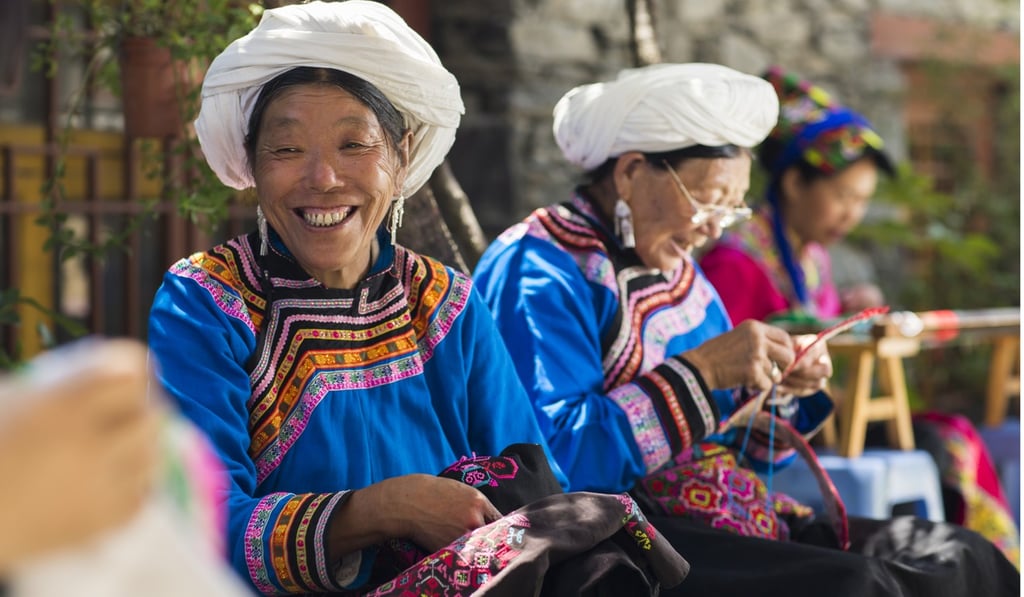
“The Qiang people have no written language, so the Qiang embroidery is carried forward only by hand and oral explanation,” Zhang said. “There are many women who can do it, but few do it well.”