A year after deadly Daxing fire, no let-up in campaign to marginalise migrant workers
- ‘Migrant workers are not being integrated, they’re just being ignored’
- Mishandling of population pressures tied to China’s rush to urbanise

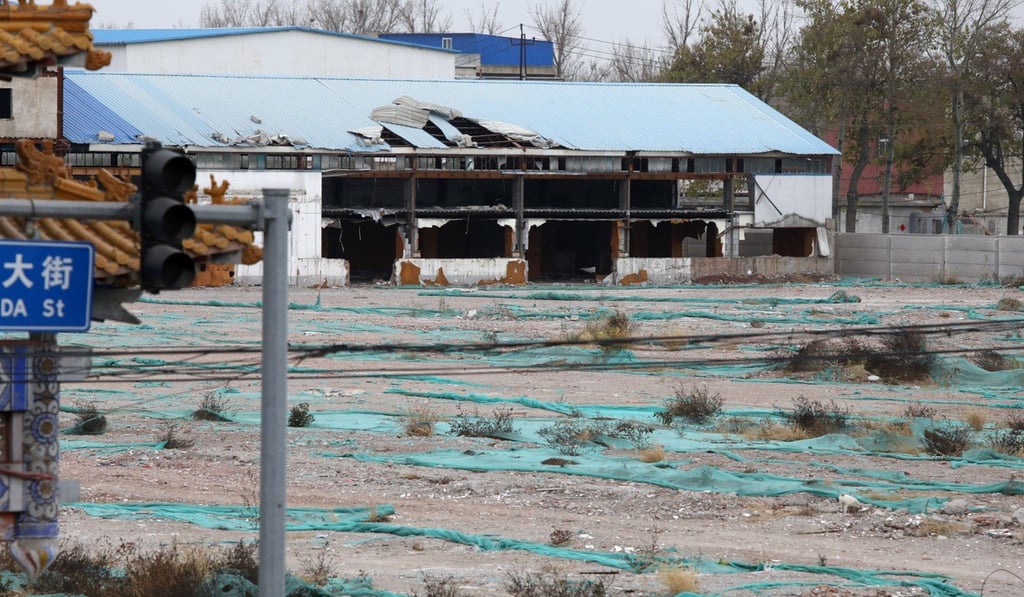
Wang Jie is an anomaly. A year ago, 19 people were killed when a building in Beijing’s Daxing district that had been converted into tiny flats caught fire. The incident triggered a massive razing of illegal structures across the city. As large swathes of Xinjian village turned to rubble, tens of thousands of migrants in impoverished communities were forced from their homes.
Wang, who runs a small noodle shop, is one of the few members of the local business community who have managed to resume operations in Xinjian after the clearing-out endeavour shut down nearly all enterprises in the village.
“There aren’t so many people left here any more,” Wang, whose store is just a few hundred metres from the site of the fire, said in an interview. “They’ve all gone home. Business is bad.”
The impact of the deadly inferno that engulfed the Gathering Fortune Apartments – a two storey building honeycombed with tiny units – on November 18, 2017, is visible on the walls that seal off a square kilometre of rubble from the rest of the village.
Billboards advertise a new “shantytown redevelopment project” – referring to a plan to tear down the old neighbourhood and replace it with new residential, business and public areas.
The advert offers an appealing bird’s eye image of several city blocks of green space dotted with new high rise flats and criss-crossed with walking paths.