Inside China’s test zone: the eyewitnesses to Shenzhen’s rise
- Taking a chance on a city’s potential, young workers moved to the new economic zone at a time when inconveniences were still rife
- Conditions in housing, transport and other basic necessities have all drastically improved under the opening-up policy

In 1978, Chinese leader Deng Xiaoping began the nation’s efforts to reform and open up. As part of that drive, Shenzhen, Guangdong province, became China’s first special economic zone in 1980, and the city’s promise lured people from all over the country in search of better lives.
Retired soldier
Wu Tao and his younger brother Wu Ming have seen the rise of Shenzhen under the reform and opening-up policy over the past 40 years. When they first arrived in 1979 and 1983 respectively, the city looked underdeveloped, surrounded by endless hills.
Wu Tao enlisted in the army and became a checkpoint soldier at Luohu district. Back then, it was an honour to be in the military. He was assigned the post near the Luohu Bridge, where he inspected the three trains travelling to and from Hong Kong every day. Wu Ming was chosen by his superiors at the Agricultural Bank of China to work at the newly built branch in Shenzhen, contributing to the development of a new economic zone.
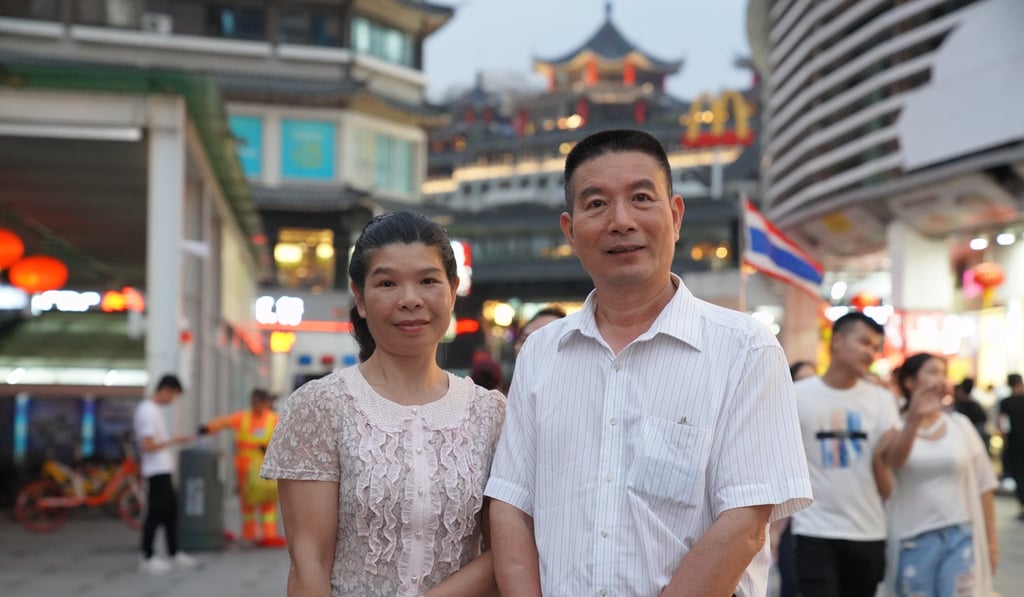
After Wu Tao retired from the army, he returned to his hometown of Yangchun and began work at a bank. He visited Shenzhen in 1985 and found the city rapidly developing with commercial buildings and residential compounds, and returned there to work in 1987.
Wu Tao said that after years of development, living conditions had completely changed for the better. Originally, he and his wife lived in a seven-square-metre (75 sq ft) dormitory. Now they have a house in a well-to-do residential compound, with a balcony overlooking a park.