Dutch court rejects Chinese villagers claim to have their Buddha mummy returned
- Village residents have been battling for several years for return of statue that contains remains of monk who died 1,000 years ago
- Court in Amsterdam District Court rules community group cannot be considered a legal entity, and is therefore inadmissible

A court in The Netherlands has dismissed a lawsuit brought by a group of Chinese villagers demanding the return of a 1,000-year-old Buddha statue containing the mummified body of a monk that was acquired by a Dutch collector.
The case has attracted worldwide attention since the residents of Yangchun in southeastern Fujian province began fighting for its return three years ago after seeing it in a television programme showing it on display in Hungary.
The villagers claim that the statue of Zhanggong Zushi, which dates back to the Song dynasty (960-1279) and had been worshipped at a local temple for a millennium, went missing in December 1995. A scan of the statue on display in Hungary showed it contained a skeleton, which is believed to be the remains of a monk who lived nearly 1,000 years ago.
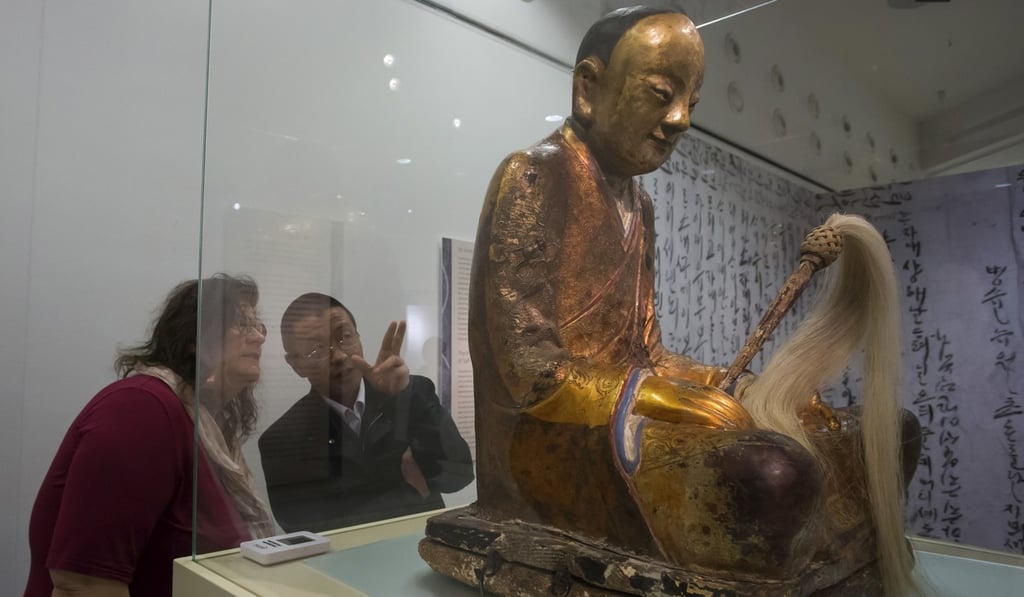
The group sought help from Chinese police and cultural authorities to collect evidence against Dutch collector Oscar van Overeem, whom they accused of buying the statue in Hong Kong in 1996.
At a hearing at the District Court of Amsterdam in October, however, Van Overeem said he did not have the statue and rejected claims he was a dealer in Chinese art and had bought the statue in Hong Kong.