China’s art copy capital struggles to change its reputation
- 40 years after Deng Xiaoping’s opening up reforms Dafen has seen its fortunes rise and fall
- Can declining overseas orders be replaced with a demand for original art?

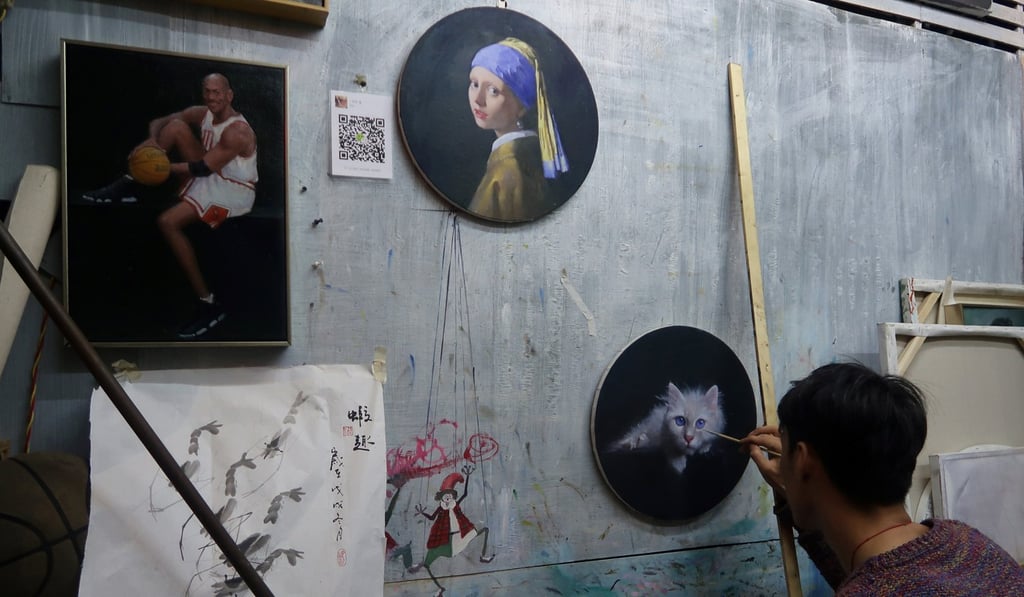
As China celebrates the 40th anniversary of its opening up reforms, one village in southern China – once an art reproductions powerhouse – is pondering its future.
Dafen, a tiny but densely populated district in Shenzhen, Guangdong province, was once an obscure village of 300 rice growers.
But a few short years after former Chinese leader Deng Xiaoping opened up China’s economy in 1978, it became an international hub, at one time accounting for 75 per cent of the world’s oil painting reproductions.
Dafen has 1,200 galleries and art businesses, employing 20,000 people, and in 2017 its output reached 4.15 billion yuan (US$601 million).
Vincent van Gogh’s swirling dreamscape vision of the night sky, the iconic The Starry Night is estimated to be worth more than US$100 million.
Ma Chunyan, a 32-year-old artist in Dafen, can produce in one day a 1,000 yuan (US$145) reproduction of the masterpiece from an image on her mobile phone.