China’s beastly bronze designs found in stone carvings at prehistoric settlement
- Patterns found on bronzeware from Shang and Zhou dynasties might actually be 4,000 years old, archaeologists say
- Similar designs found at Shimao during latest excavation of ancient site in Shaanxi province

The distinctive, often beastly, patterns found on classical Chinese bronzeware may be thousands of years older than first thought, archaeologists said after finding similar designs carved into the stone walls of a prehistoric settlement in the country’s northwest.
A team working at the Shimao archaeological site in Shaanxi province made the discovery during a recent excavation of the city’s Neolithic ruins, which are thought to date back to about 2,000BC, state broadcaster CCTV reported on Monday.
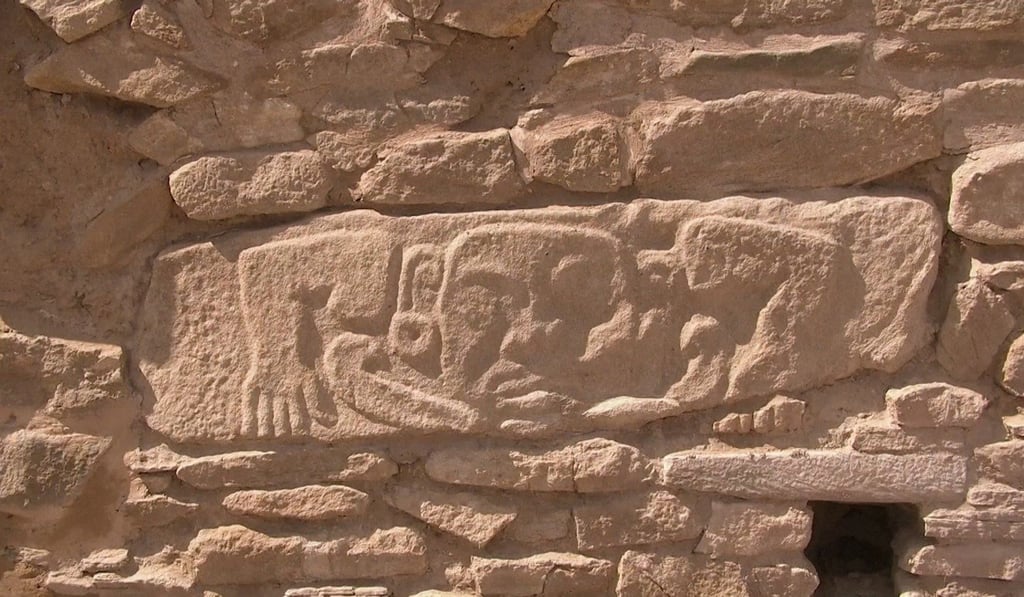
“The beast-face patterns found in Shimao might have had a significant influence on the motifs of China’s Bronze Age,” Sun Zhouyong, president of the Shaanxi Provincial Institute of Archaeology, said in the report.
Researchers unearthed about 30 carvings at the site with designs similar to those found on the elaborately decorated bronze vessels of the Shang and Zhou dynasties (1600-256BC). While most of them featured a recurring geometric pattern, others were of monstrous faces, the report said.
Shimao, which covers about 4 sq km (1½ square miles), is China’s largest prehistoric archaeological site, comprising fortifications, palaces, houses, tombs and sacrificial altars.
Discovered in 1976 it was declared a protected cultural heritage site 30 years later but was not thoroughly excavated until 2011. Since then a large amount of jade, evidence of animal sacrifice and about 100 murals have been found at the site suggesting it was an important city in its day.