Beijing’s last ‘ghost market’ might be a shadow of its former self but vendors still have a lot of spirit
- The last surviving night market in China’s capital is still a place for bargains, despite changing shopping habits

After dark, in a certain part of Beijing, ghosts appear. One of them is jade seller Wang Guishan, who sets off after nightfall to prepare his small stall in the city’s last surviving night market.
Daliushu market is held every Tuesday night in an open space between residential buildings and rows of restaurants, not far from the east fourth ring road. Wang picks a corner spot between two buildings and sinks comfortably into a chair. He will be there all night.
“Ghost markets” – so-called because they operate only at night and disappear with the dawn – have been a popular Beijing tradition since the late Qing dynasty when changing times meant many in the imperial court were rapidly losing their fortunes and needed to convert their valuable antiquities into cash.
To avoid the embarrassment of selling off the family heirlooms in broad daylight, the markets were held at night and shoppers were required to bring their own lights. The concept was quickly embraced by Beijingers hoping to pick up something of value for a good price.
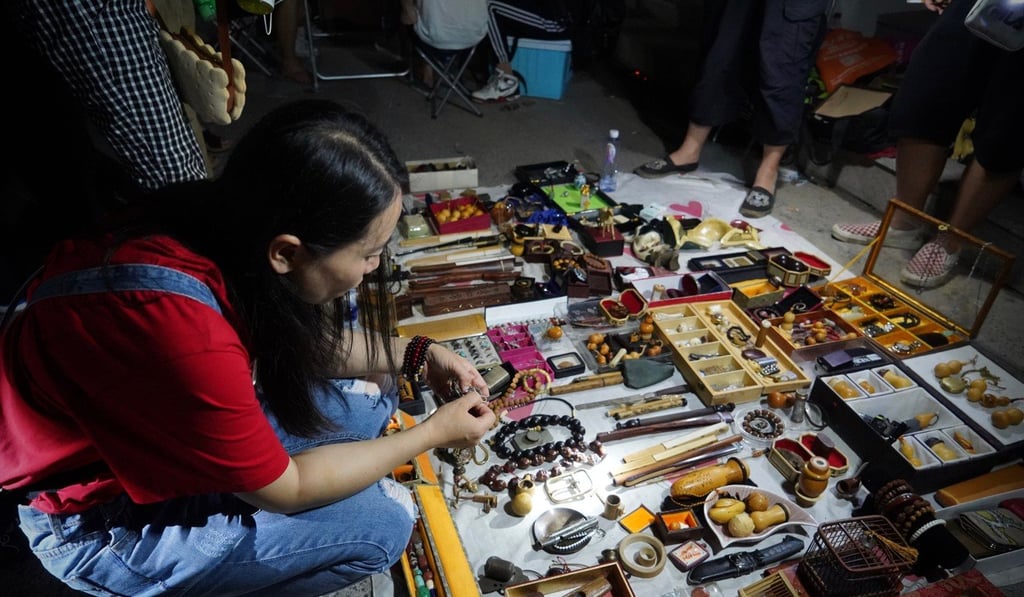
“There are certain rules while you browse the market,” Wang said. “You can only look at the goods, not at the seller, and you can't shine your flashlight at people. If you find something valuable, it’s your gain. If you overpay, it’s your own loss.”