Community the silver lining for growing number of elderly Chinese living and dying alone
- Academic says nation is in ‘awkward period’ as 255 million people aged over 60 deal with economic change and legacy of one-child policy

Unmarried, alone, and without children, a 67-year-old man who lived in Shanghai’s Baoshan district died at home without being noticed by anyone until his body started to rot.
He was a private person who hadn’t been in the best of health, the Xinmin Evening News reported. Although he left his front door unlocked, his body went undiscovered in the summer heat until the end of July, when the smell prompted his neighbours to call the police.
Just a month earlier, a woman in her 70s who lived alone died in her flat in Nanjing, the Yangtse Evening Post reported in June. She had a son and a daughter who visited her every couple of weeks, but she was only found dead beside her bathtub when a community worker paid a routine visit.
The cases are just two that have made headlines in a country where older generations have traditionally lived with and been cared for by their children and grandchildren. There is no official data on how many people in China live by themselves but observers say planners will need to anticipate their needs as the population ages.
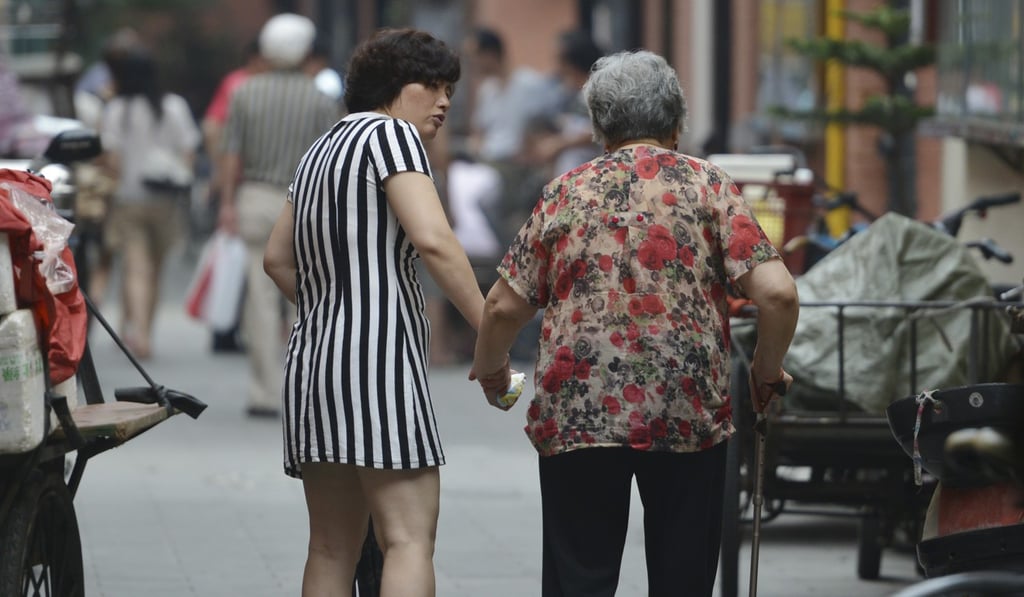
The central government forecasts that by next year China will have 255 million people aged above 60, accounting for 17.8 per cent of its total population. That’s up from 220 million four years ago.
China’s population is greying in part because people are living longer but also because the one-child policy and economic changes have led to lower fertility rates. Of those aged over 60, nearly half do not have children or live apart from them, experts say.