How sharing fish-skin clothing traditions of China’s ‘mermaid’ Hezhen people may keep them alive
- You Wenfeng, who belongs to an ethnic group of 5,000 people, is giving Han Chinese students an education in folklore and the craft she learned from her mother
- More than 50 fish skins and weeks of patience and skill are needed in making a top and trousers

You Wenfeng, who belongs to China’s Hezhen ethnic group, is one of the few people in her community who can still make clothing from fish skins.
She was not born when her kinsmen were thrown into labour camps during Japan’s occupation of Manchuria in the 1930s and 1940s.
“Many Hezhen clans perished, but my mother survived to pass on her fish-skin knowledge to me,” the 68-year-old said.
A Tungusic people native to Siberia and on the Black Dragon river, as the Amur is known in China, the Hezhen rebuilt its population to 5,000 from 300 after the second world war. Such was their skill on the water that legend said they were descended from mermaids.
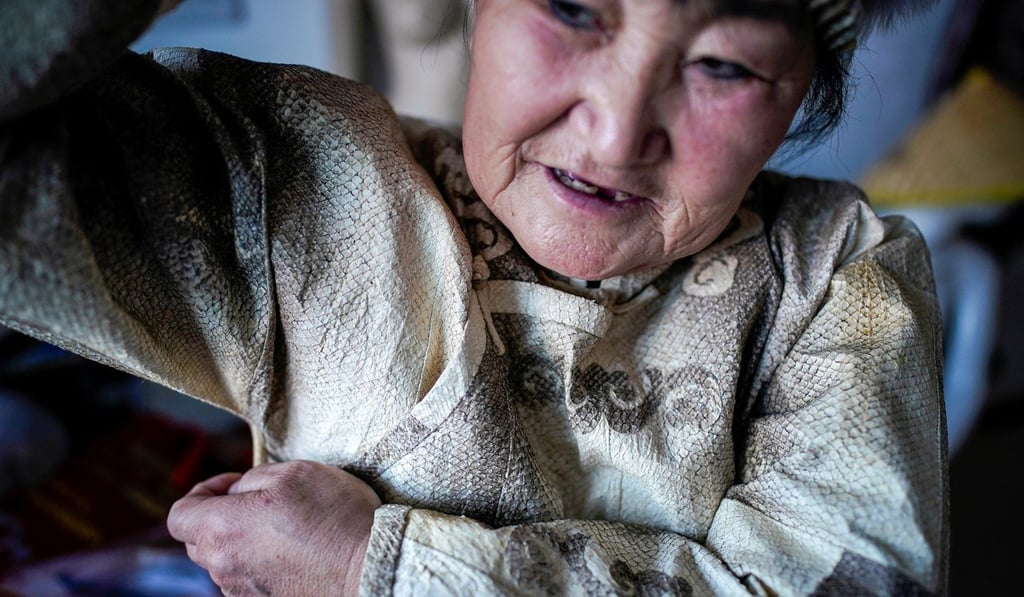
But that has not stopped the decline of Hezhen culture, including the tradition of making garments from the skins of carp, pike and salmon.