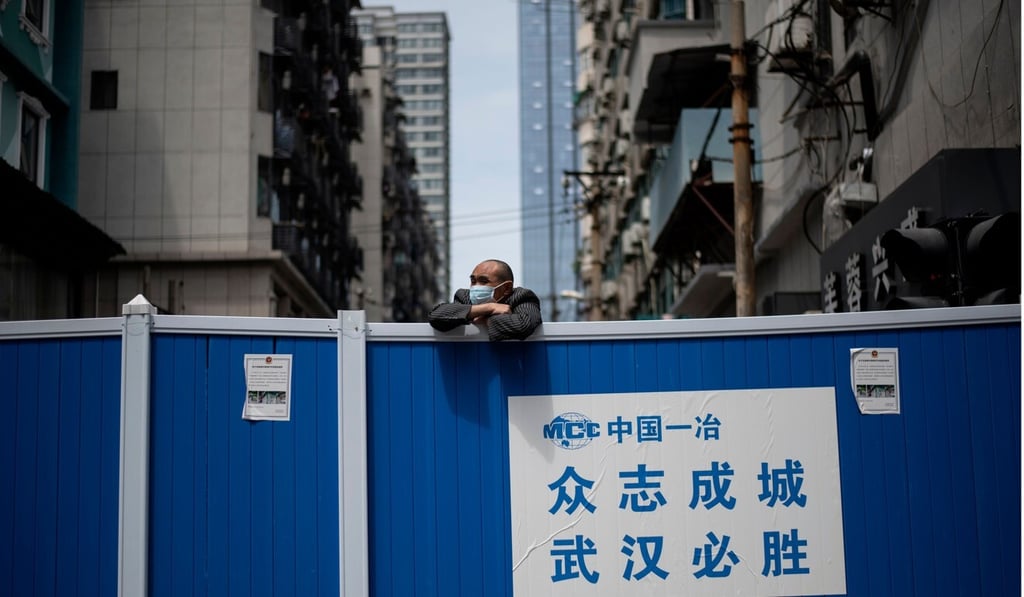
Street by street, home by home: how China used social controls to tame an epidemic
- Neighbourhood monitoring system is at the heart of restrictions imposed ‘at the expense of public autonomy and vitality’
- Chinese city has eased restrictions, but measures remain in place for community ‘cells’

One of them, 75-year-old Jiang Hong, said the last three months had been just like life in the Mao Zedong era.
“It’s déjà vu really – a throwback to the 1960s when we lived in the people’s communes and everything was taken care of but you didn’t have much choice,” the retiree said.
But in 2020, she said officials used smartphones instead of loudhailers to get their message across. And people no longer relied on the food coupons widely used in China in the ’60s to buy essentials.
Like many elderly residents, Jiang had to learn to use social media app WeChat to adapt to her “new collective life”. All the residents in her community “cell” are connected through a WeChat group where they receive government messages and make payments online. These cells make up a grid-based neighbourhood monitoring and management system that exists across China.
Jennifer Pan, an assistant professor of communication at Stanford University, described it as an “upgrade of the urban household unit management system” that has been in place since the Mao era.