
Coronavirus: crackdowns, racism and forced quarantine heighten tension for Africans in Guangzhou
- Community representatives say Chinese authorities risk harming trade and relationships with African nations
- Some tough measures may be a cover for finding overstayers, professor says
For the first time in the 16 years he has been in China, William Akuma was asked in April to leave his own home.
“They came to my house, and said every black person needs to be quarantined,” Akuma, chairman of the Cameroonian Community Guangdong, said. “I’ve been in China since the beginning of the outbreak, why should I quarantine? So I refused it.”
Authorities had imposed a blanket quarantine and monitoring measures for people from “high-risk countries”, requiring everyone from African countries to quarantine for 14 days from April 9.
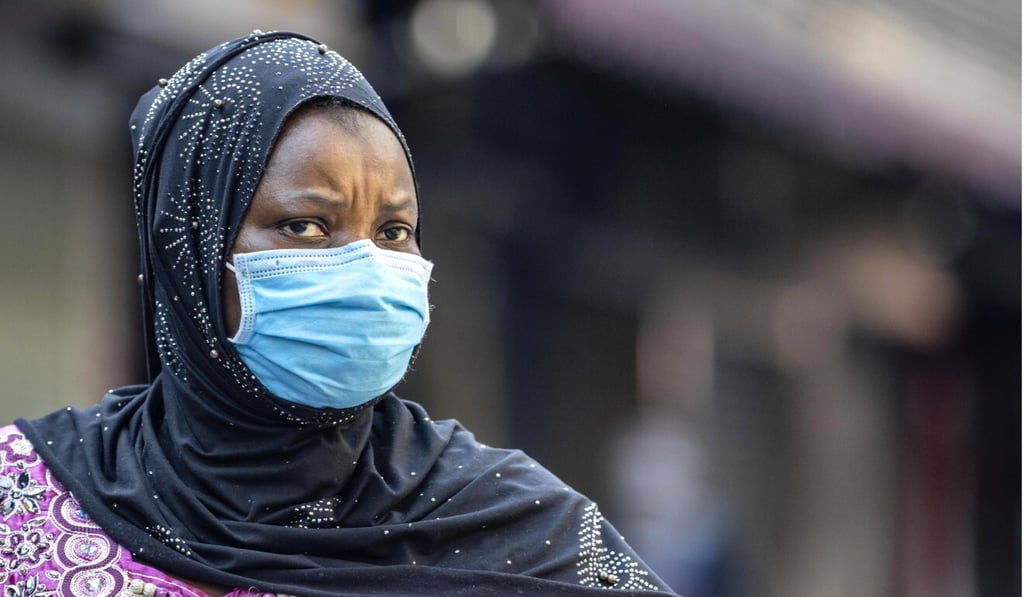
As the new rules came in, there were also reports that some Africans had been evicted from their homes and hotels or were subjected to forced quarantine, even if they had no links to recent arrivals from overseas.
The reports and the uncertainty experienced by Akuma and others highlights the various pressures faced by Africans in Guangzhou as the community has grown over the past few decades.
Gordon Mathews, a professor of anthropology at the Chinese University of Hong Kong, said the African community began to emerge in the city in the 1990s as Guangdong province gained a reputation as the factory of the world.
Most people went back and forth between Guangzhou and Africa for trade but many stayed and married locals, and the African community flourished, he said.
Akuma arrived in China 2004 as a tourist, stayed to teach English and later moved into business, buying electronics in Guangzhou and shipping them back to Cameroon to sell.
Over the years, he focused on medical devices and equipment. His business has grown to include partners in South Korea, the United States and Europe but now he is shifting his attention to Africa.
“Guangzhou is the best place to do business when it comes to international trade,” he said. “It’s the commercial centre of China.”
Afro-Chinese marriages boom in Guangzhou: but will it be 'til death do us part'?
Akuma has made a home in China, marrying a woman from the southern province of Guizhou, and is one of an estimated 16,000 Africans in Guangzhou, mostly from Nigeria and Egypt.
As that community has grown, so too have China’s ties with Africa. Beijing has invested billions of dollars in the continent, engaged several nations, including Kenya, Nigeria, Egypt and Ethiopia, in its Belt and Road Initiative, and sent medical teams and supplies to help fight the Covid-19 pandemic.

One point of conflict was the relatively large population of overstayers, or people whose visas had expired and were staying illegally, Mathews said.
“It’s easy to see why a person can come on over [and] become an overstayer. I know among the Nigerians, that the cost for renewing your visa was ridiculously expensive,” he said.
Also, as they were engaged in business, there was a motive to stay.

Maximus Ogbonna, president of the Association of Nigerian Community China, said some people were refused a visa renewal, even if they had no criminal record. It could only be extended through an agency, costing at least 20,000 yuan (US$2,800).
From time to time, authorities also performed checks on members of the community, pounding on doors to check people’s visa status.
Ogbonna said it was also getting more difficult for Africans to find flats, with many landlords refusing to accept them.
Mathews said crackdowns had been going on for years as a way for China to keep the community orderly. In 2013, there was a heroin bust, then the police began showing up everywhere, constantly checking the identification of Africans.
It was not known how much the recent crackdown was to really fight the virus and how much it was to target overstayers, Mathews said.
However, there is lasting damage. Many supermarkets and restaurants are not letting black people in.
“This is a continuation of how we were treated in the past,” Ogbonna said. “Now it’s worse and it’s full-scale.”
A Guangzhou Communist Party official close to the security bureau, who asked to remain anonymous, said that from an official point of view, it had always been difficult for the authorities to manage the community.
Officials intent on cleaning up Guangzhou had wanted to rid the city of issues of fraud and other criminal activities, such as smuggling drugs. Some African immigrants were not clear on Chinese laws, making the community difficult to control.
“On a policy level, they also need to treat illegal immigrants seriously, and try to mitigate negative effects while developing the economy and trade,” the person said.
However, for many African residents, Guangzhou is where they want to be.
Alain Daniel Yando, a Cameroonian businessman who has been in Guangzhou for more than 10 years, said he had cordial relations with Chinese and other nationalities. He called Guangzhou a “melting pot of peoples and cultures”.
“You can obtain either African, European or Asian products here in Guangzhou without necessarily travelling to those parts of the world. To me Guangzhou is a one-stop shop because of its huge and rich sociological diversity,” he said.
William Akuma was not forced by authorities to go into quarantine in a hotel after all but he remains upset about how coronavirus matters have been handled.
He said that if the authorities had sought cooperation from African community leaders first, instead of mishandling residents, the outcome would have been different.
“This virus has caused a lot of damage, I’m afraid it might destroy the relationship between China and Africa,” he said.
“Leaders in the community should instead be having meetings, conversation, sit down and hold dialogue.”

.jpg?itok=5yjeCQMR&v=1700020945)
